
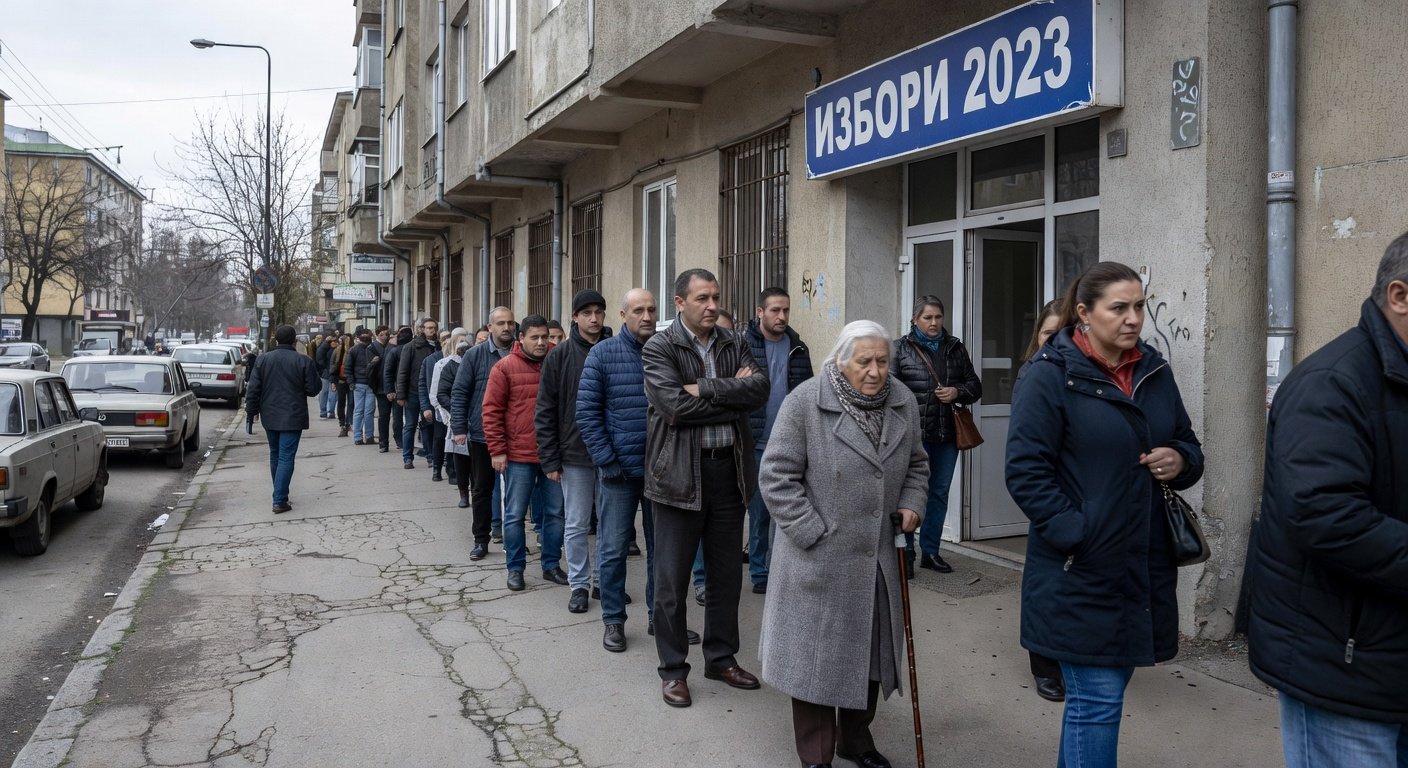
Sofia's streets filled with long lines early Sunday as Bulgarians voted in their eighth parliamentary election in five years. Polling stations opened at 7 a.m. local time, drawing crowds frustrated by years of political deadlock and corruption scandals.
The snap vote on April 19, 2026, follows the December 2025 resignation of the conservative-led government. Massive protests erupted then over graft allegations, forcing Prime Minister Rosen Zhelyazkov to step down after just months in office.
Former President Rumen Radev, now leading his party, tops polls at 35%. His pro-Russian stance resonates amid economic woes and EU tensions. Boyko Borissov's GERB party trails at 18-20%, according to Alpha Research surveys.
High turnout signals change. Pollsters predict 60% participation, double the 34% from June 2024. Stations close at 8 p.m. local time, with exit polls due immediately after and preliminary results on Monday.
“We need practical relations with Russia based on mutual respect and equal treatment.”
Rumen Radev, former president and party leader, said this in a recent interview. His pivot toward Moscow contrasts with Bulgaria's NATO membership and EU sanctions on Russia over Ukraine.
Analyst Maria Petrova, director at Sofia-based Alpha Research, tracks the shift.
Boyko Borissov, GERB founder and ex-prime minister, voted early in the capital. He dismissed Radev's lead as protest noise. Turnout this high favors anti-establishment voices, Borissov told journalists, vowing to block any pro-Russian tilt.
Protests last December paralyzed Sofia for weeks. Demonstrators accused Zhelyazkov's cabinet of shielding corrupt officials in a 240-million-euro EU funds scandal. Police clashed with crowds near the parliament building on December 15, 2025.
Political scientist Ivan Ivanov at Sofia University explains the cycle.
EU Ambassador Helena Leslie observed voting in Plovdiv. She stressed Bulgaria's bloc obligations. Any government must uphold EU values and sanctions, Helena Leslie, EU Ambassador, said, amid concerns over Radev's Russia-friendly rhetoric.
Voters like 52-year-old teacher Elena Dimitrova in Sofia cited corruption as her driver.
GERB supporter Petar Nikolov, a 45-year-old engineer, backed Borissov. Pro-Russia means economic isolation, Petar Nikolov, GERB supporter, argued at a Varna polling site. Nikolov fears delays in Bulgaria's eurozone entry, targeted for 2026.
| Party | Polling Avg. | Seats Projection (240 total) |
| Progressive Bulgaria (Radev) | 35% | 84 |
| GERB (Borissov) | 19% | 46 |
| Revival | 12% | 29 |
| Others | 34% | 81 |
Parliament holds 240 seats. No party has won a majority alone in recent votes. Negotiations could drag into May.
Reuters reported stations busy nationwide, with expatriate voting in Turkey and the UK adding thousands. AP News confirmed the eighth election timeline since 2021. Euronews noted exit polls post-1700 GMT.
Stakes extend beyond borders. A Radev-led government could strain Bulgaria's Black Sea NATO role and Ukraine aid shipments through its ports. Watchers expect coalition talks to dominate spring politics.