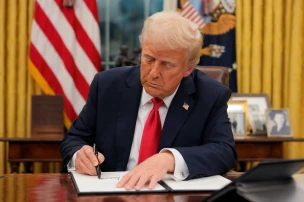

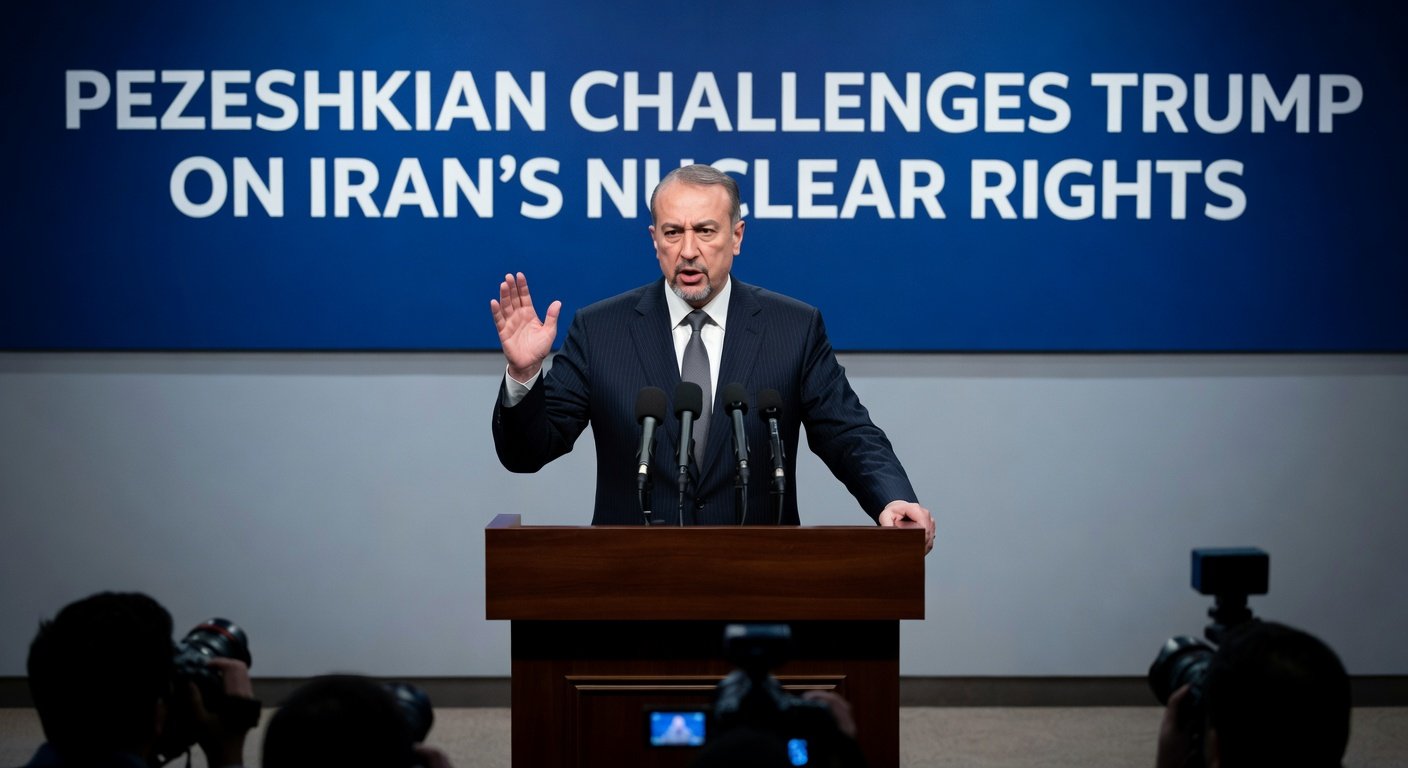
Iranian President Masoud Pezeshkian fired back at U.S. President Donald Trump on April 19, 2026, declaring that Trump lacks any justification to strip Iran of its nuclear rights.
Speaking from Tehran, Pezeshkian challenged the American leader's stance during a period of heightened tensions. Iran had briefly reopened the Strait of Hormuz earlier that day, only to close it again amid U.S. demands for a nuclear agreement.
Pezeshkian questioned Trump's authority in stark terms.
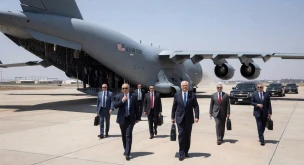
Trump responded with a blunt warning on social media, escalating the rhetoric as U.S. negotiators prepared for indirect talks. Vice President JD Vance, Steve Witkoff, and Jared Kushner were set to travel to Pakistan on April 21 for the second round of discussions with Iranian representatives.
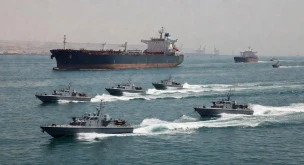
The Strait of Hormuz closure disrupts roughly 20% of global oil shipments, with daily volumes exceeding 20 million barrels passing through the 21-mile-wide waterway. Iran controls its northern shore, giving Tehran leverage in disputes with the West.
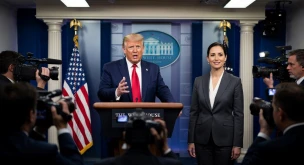
Trump outlined severe consequences for stalled negotiations.
We're offering a very fair and reasonable DEAL, and I hope they take it because, if they don't, the United States is going to knock out every single Power Plant, and every single Bridge, in Iran.
— Donald Trump, President of the United States
Analysts point to the Strait's strategic value. In 2025, over 440 ships transited daily on average, carrying 970 million barrels of oil annually through the channel, according to shipping data from Lloyd's List.
David Sanger, chief Washington correspondent for The New York Times, noted the high stakes. "These talks in Pakistan represent a fragile channel, but Trump's threats could derail progress before it starts," Sanger said in a phone interview from Washington.
Pezeshkian's comments echoed across Iranian state media, framing the U.S. position as unjust interference. The remarks came hours after Iran's navy announced the Hormuz closure, citing American blockade threats as provocation.
Israeli Prime Minister Benjamin Netanyahu's office monitored the exchange closely. "Iran's nuclear ambitions remain an existential threat, and any deal must include verifiable limits," said Mark Regev, senior advisor to Netanyahu, in a statement to reporters in Jerusalem.
U.S. officials emphasized the Pakistan venue's neutrality. Pakistan, a nuclear-armed nation with ties to both sides, hosted the first round last month. No breakthroughs emerged then, leaving core issues like enrichment levels unresolved.
Suzanne Maloney, a Middle East expert at the Brookings Institution, described the dynamic. "Pezeshkian's defiance rallies domestic support, while Trump's pressure tactics aim to force concessions," she explained from her Washington office.
The U.S. has imposed sanctions blocking Iranian oil exports, which peaked at 2.5 million barrels per day before the measures. Current flows hover below 1 million, per U.S. Energy Information Administration figures.
European diplomats urged restraint. EU foreign policy chief Josep Borrell called for de-escalation in a Brussels briefing. "Military threats undermine diplomacy; all parties must return to the table," Borrell stated.
Iranian Foreign Minister Abbas Araghchi prepared to oversee the Pakistan talks remotely from Tehran. Sources close to the delegation said Iran seeks sanctions relief in exchange for limits on low-level enrichment.
Trump's team views the offer as generous, including phased sanction removals tied to IAEA inspections. Pezeshkian rejected this as insufficient during a televised address.
Military movements added urgency. U.S. Navy ships patrolled the Persian Gulf, while Iranian speedboats shadowed tankers near Hormuz. No shots were fired, but satellite imagery showed increased deployments on both sides.
Ray Dalio, founder of Bridgewater Associates, weighed in on economic ripples. "Hormuz disruptions could spike oil to $150 per barrel, hammering U.S. consumers," Dalio posted on X from his Connecticut office.
Pezeshkian's election in 2024 promised moderation, but nuclear hardliners in Iran's parliament push back against compromise. Supreme Leader Ali Khamenei holds final say on any deal.
As negotiators board flights to Islamabad, the world watches a waterway that funnels one-fifth of seaborne oil trade. Failure in Pakistan risks broader conflict, with power grids and infrastructure in the crosshairs.