
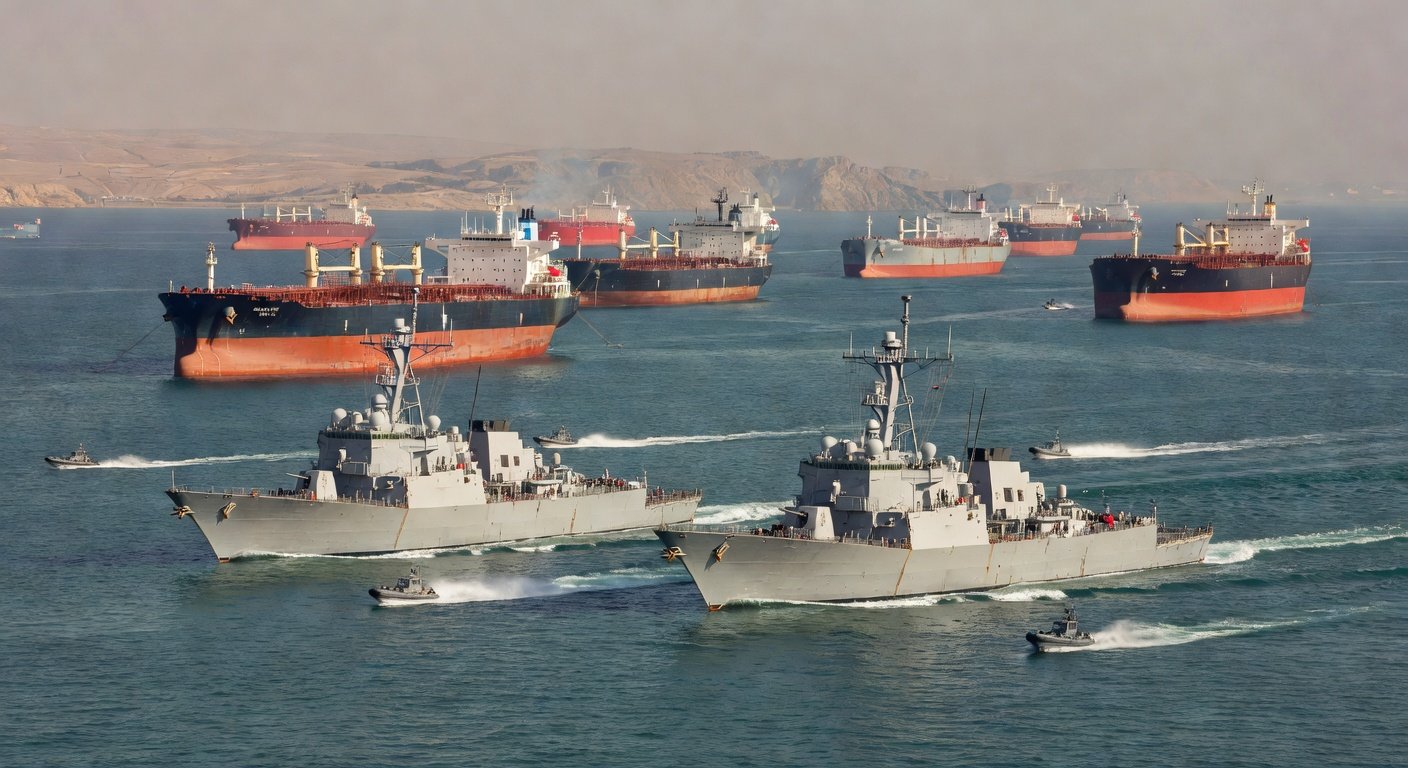
Explosions echoed across the Strait of Hormuz on April 18, 2026, as Iran's Revolutionary Guard Corps (IRGC) reimposed a military lockdown on the world's most critical oil chokepoint.
Less than 24 hours after briefly reopening the strait, Iranian forces turned back tankers from Botswana and Angola, while firing warning shots at a French naval vessel, a UK freighter, and two Indian-flagged ships. The swift reversal came in direct response to what Tehran described as ongoing U.S. naval blockades of Iranian ports along the Persian Gulf.
Mohammad Bagher Ghalibaf, Speaker of Iran's Parliament, addressed the nation from Tehran late Friday.
U.S. naval assets, including the aircraft carrier USS Abraham Lincoln and destroyers from the Fifth Fleet, maintain positions blockading Bandar Abbas and other key Iranian ports. Pentagon officials confirmed the measures target Iran's ability to export oil and military supplies, a response to earlier IRGC missile strikes on U.S. bases in the region.
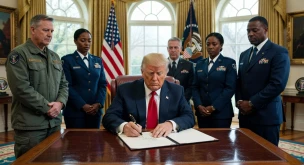
President Donald Trump reacted swiftly from the White House Situation Room.
Iran decided to fire bullets yesterday in the Strait of Hormuz — A Total Violation of our Ceasefire Agreement! ... if they don't, the United States is going to knock out every single Power Plant, and every single Bridge, in Iran. NO MORE MR. NICE GUY!Trump posted the statement on Truth Social, tagging his national security team.
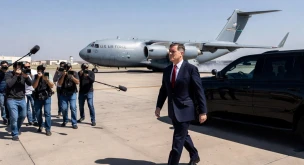
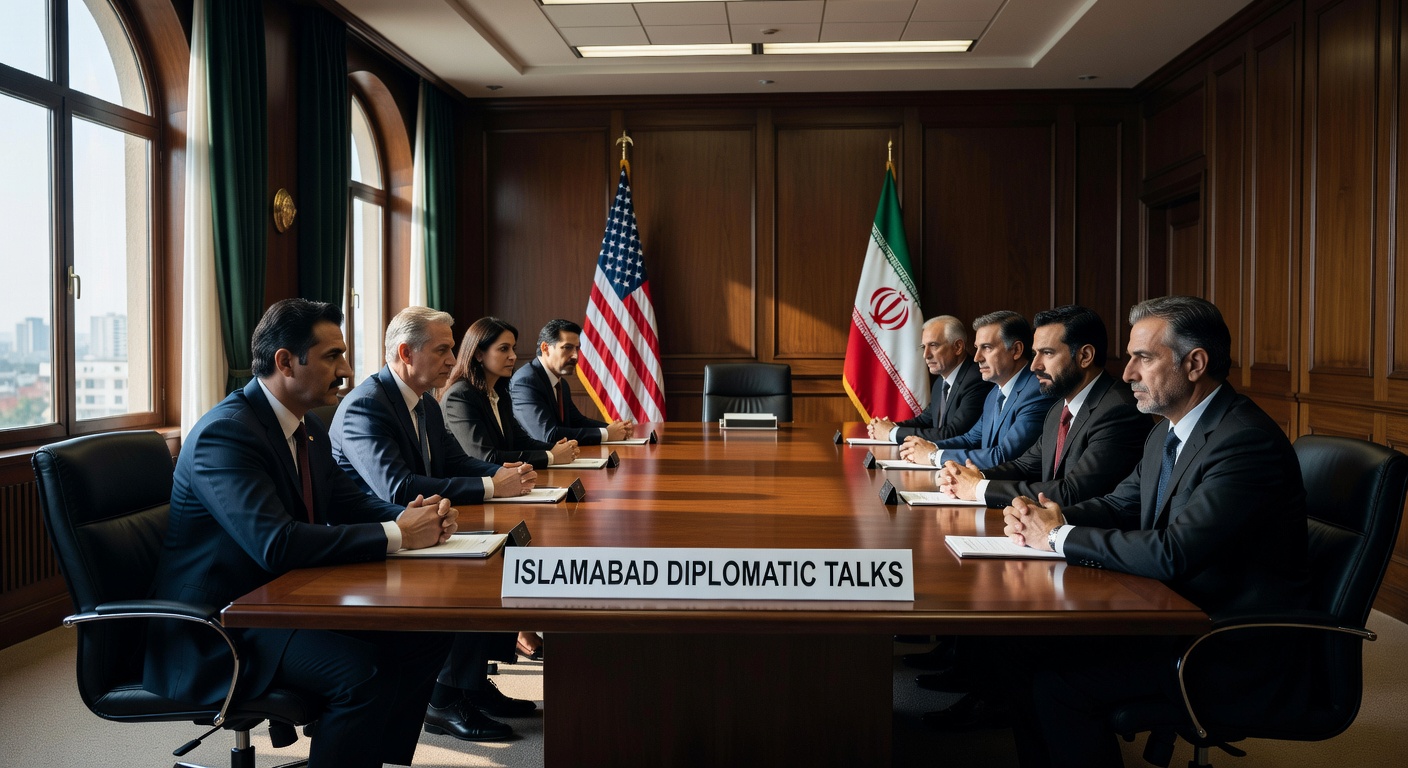
The two-week ceasefire, brokered in Doha on April 8, expires on April 22, 2026. Trump announced that a U.S. delegation, led by Special Envoy Steve Witkoff, departs for Islamabad, Pakistan, on April 20 for high-stakes talks with Iranian intermediaries. Pakistani Prime Minister Shehbaz Sharif confirmed the venue, citing Islamabad's neutral role in prior Gulf mediations.
Rear Admiral Ali Reza Tangsiri, IRGC Navy commander, inspected patrol boats near Qeshm Island at dawn on April 18. Speaking to state media, he detailed how 2 Iranian fast-attack craft enforced the closure, inspecting over 500 vessels in recent days before the lockdown. Only ships with explicit IRGC clearance now pass, Tangsiri said, emphasizing inspections for 'prohibited cargo.'
Global shipping routes ground to a halt. The International Maritime Bureau reported 12 vessels idling off Oman, including two supertankers carrying 500,000 barrels of crude each. Brent crude futures spiked 8% to $98 per barrel in after-hours trading, with analysts at JPMorgan warning of $120 if the strait remains shut beyond 72 hours.
France's Foreign Ministry summoned Iran's ambassador in Paris after shots targeted the frigate FS Surcouf. Captain Jean-Pierre Dubois, commanding the ship, described the incident: Three volleys of 12.7mm rounds splashed 200 meters off our bow at 0630 local time. We held position but alerted NATO allies.
British officials confirmed a similar encounter involving the freighter MV Atlantic Venture. The UK Maritime Trade Operations center in Dubai logged the event at 0715, noting the crew sheltered in citadels as Iranian RHIBs circled aggressively.
India's Shipping Ministry in New Delhi expressed alarm over the two affected vessels, both en route to Mumbai with petrochemicals. Ambassador Ramit Sethi raised the issue in Tehran, demanding safe passage under UNCLOS conventions.
John Kirby, White House National Security Council spokesman, briefed reporters in Washington. The U.S. blockade is lawful self-defense under Article 51 of the UN Charter, Kirby stated, pointing to IRGC drone attacks on U.S. shipping last month. He declined to detail potential strike plans but affirmed Trump's directive for readiness.
In Tehran, Supreme Leader Ali Khamenei's adviser, Ali Shamkhani, met with IRGC commanders at the Imam Khomeini Husseiniya. Shamkhani framed the closure as defensive sovereignty, rejecting U.S. demands to lift port sanctions first. Iranian state TV aired footage of minesweepers deploying in the strait, a move not seen since 2019.
Pakistani Foreign Secretary Jalil Abbas Jilani confirmed U.S. travel logistics for the Islamabad talks. We expect both sides to honor the venue's neutrality, Jilani told Reuters by phone. The city, 1,200 miles from the strait, has hosted prior U.S.-Iran backchannels.
Energy experts track ripple effects. The U.S. Energy Information Administration notes the strait handles 21 million barrels daily, 20% of global oil trade. A prolonged closure could force tankers around Africa's Cape of Good Hope, adding 15 days and $1 million per voyage in fuel costs.
European diplomats push for de-escalation. EU foreign policy chief Josep Borrell called for immediate hotline activation between U.S. and IRGC naval commands, referencing a 2023 incident avoidance protocol.
As night fell over the strait on April 19, radar from Omani airfields detected 15 IRGC boats weaving through anchored supertankers. No further shots rang out, but satellite imagery from Maxar showed U.S. F-35s orbiting 100 miles offshore, engines hot.