

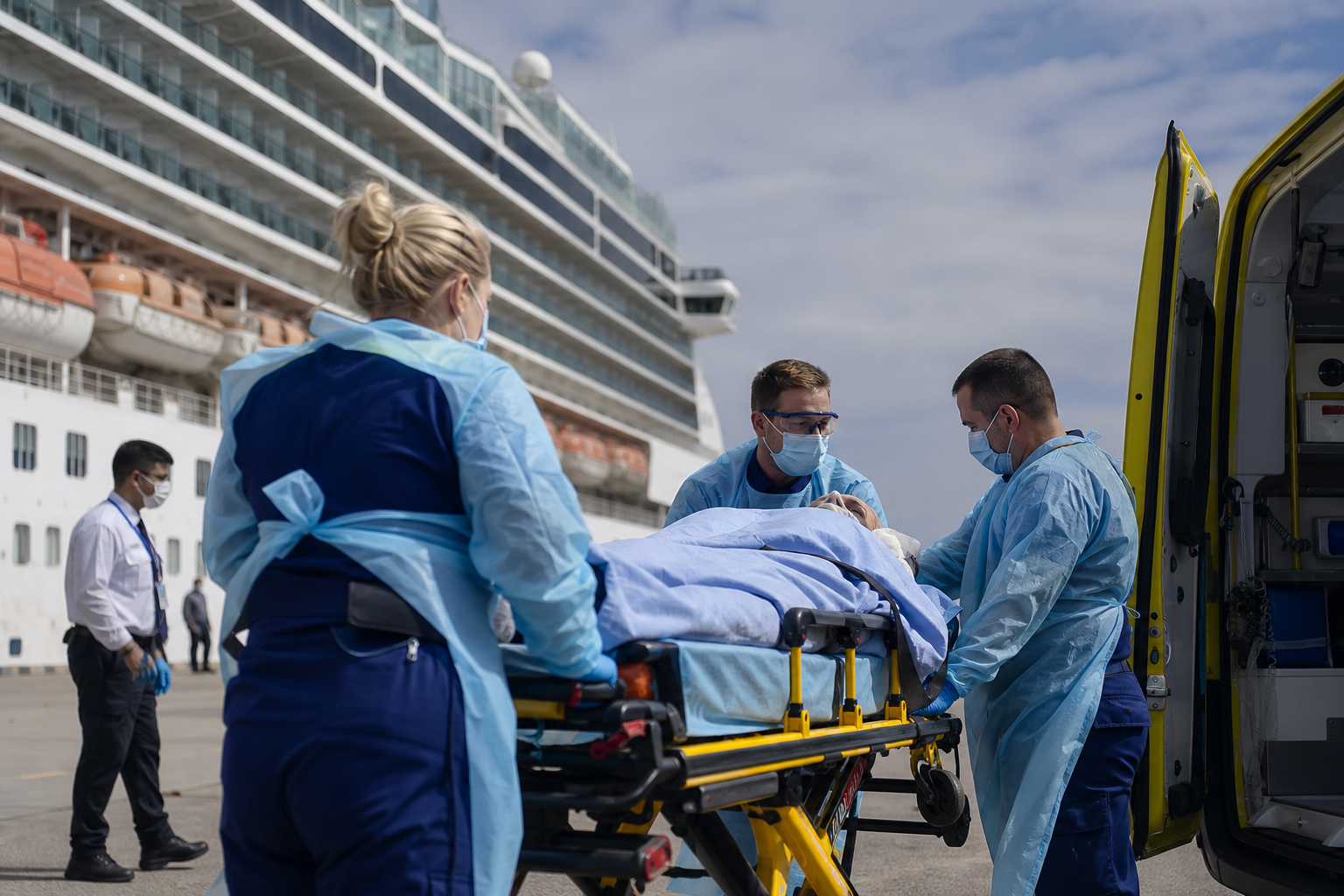
A French passenger fights for her life on an artificial lung as the hantavirus outbreak aboard the MV Hondius cruise ship reaches eleven cases and three deaths.
The World Health Organization confirmed eight confirmed cases, two probable infections, and one inconclusive result as of May 13, 2026. The vessel was operating near the Canary Islands when symptoms first appeared among passengers and crew. Public health authorities moved quickly to test everyone onboard and isolate those affected.
The most severe case involves a French woman now receiving care at Bichat Hospital in Paris. She developed critical cardiopulmonary complications that required extracorporeal membrane oxygenation support. Dr. Xavier Lescure, an infectious disease specialist at the hospital, described her condition in direct terms.
She is on an artificial lung and a blood bypass to allow her, we hope, to get through this stage, said Dr. Xavier Lescure, an infectious disease specialist at Bichat Hospital in Paris.
Seventeen American passengers have been medically repatriated to facilities in Nebraska and Georgia. They are undergoing evaluation and close monitoring for any signs of illness. The Centers for Disease Control and Prevention continues to follow these individuals and has assessed the risk to the broader public as low.
Hantavirus, specifically the Andes virus strain in this cluster, spreads mainly through contact with infected rodent droppings, urine, or saliva. Human-to-human transmission is uncommon, yet the confined environment of a cruise ship can accelerate exposure. Symptoms typically begin with fever and muscle aches before progressing to respiratory distress in severe cases. Health officials emphasize early detection to improve outcomes in such outbreaks.
The three deaths linked to the outbreak have prompted heightened alerts for all recent travelers on the MV Hondius. Officials urge anyone who sailed on the vessel to watch for symptoms and seek immediate medical attention if they appear. Disinfection protocols and quarantine measures remain in place for the ship.
American passengers who returned home described sudden onset of illness during the voyage. Their repatriation reflects standard procedure for managing potential infectious disease clusters involving U.S. citizens abroad. Health teams in Nebraska and Georgia coordinate with federal authorities to track any further developments.
Investigators continue to determine the exact source of rodent exposure on the vessel. The outbreak underscores ongoing challenges in preventing zoonotic diseases during international travel. Coordination between the WHO, CDC, and national health ministries continues as monitoring extends through the virus incubation window of up to six weeks. Additional surveillance efforts are underway to prevent further spread among global travelers.