
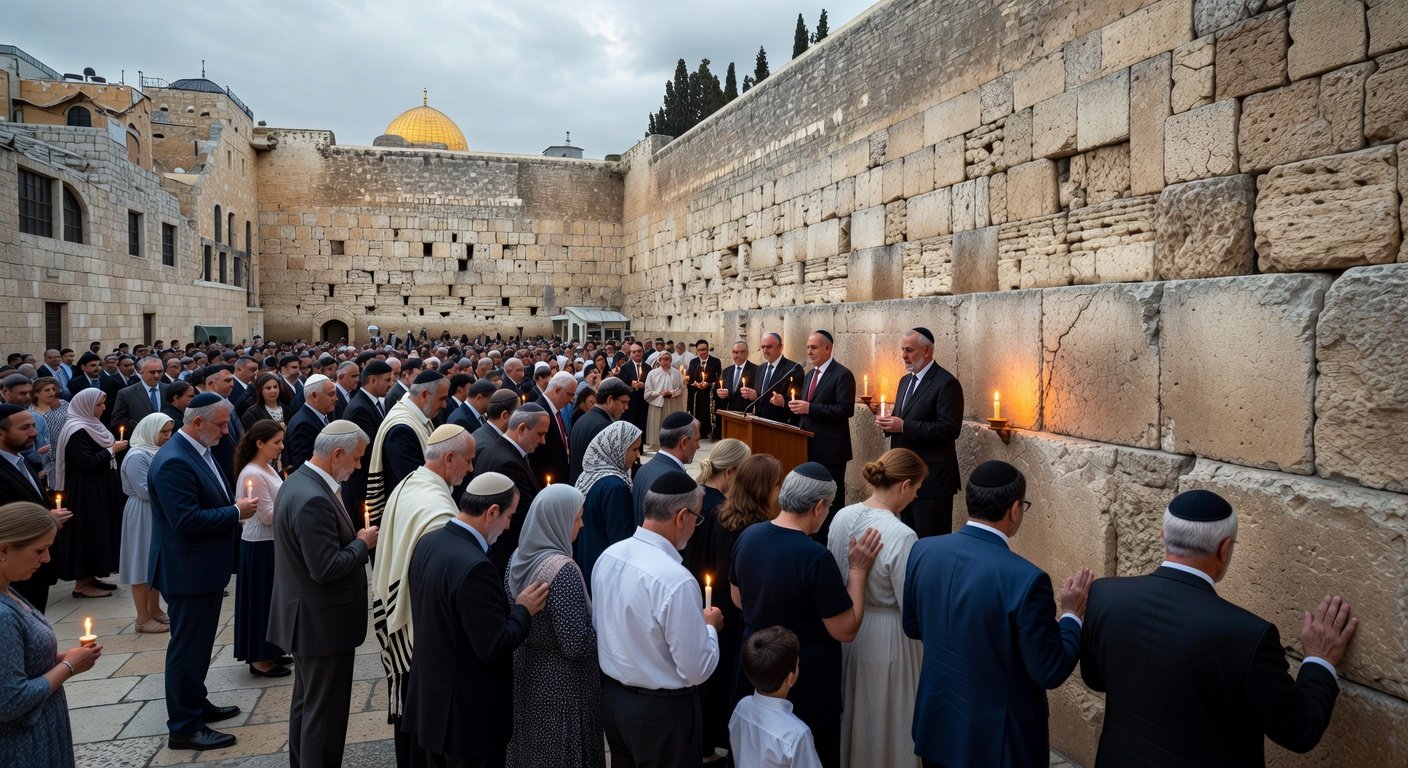
Smoke from memorial torches curled into the evening sky over Jerusalem's Western Wall Plaza as Israel's state memorial ceremony for Yom HaZikaron commenced precisely at 20:00 on April 20, 2026.
A one-minute siren had wailed across the nation moments earlier, halting traffic and daily routines in a collective pause for reflection. The event at the ancient stone plaza drew bereaved families, who stood shoulder-to-shoulder with dignitaries under the floodlights.
President Isaac Herzog opened the proceedings with a solemn address, invoking biblical wisdom to frame the nation's enduring grief and resolve.
Defense Minister Israel Katz joined Herzog on the elevated platform, flanked by IDF Chief of Staff Maj. Gen. Eyal Zamir. Families of the 174 soldiers and terror victims who fell since last year's ceremony clutched photos and yahrzeit candles, their faces etched with quiet sorrow.
The ceremony pays tribute to 25,648 fallen IDF soldiers and terror attack victims dating back to 1860. Organizers lit memorial torches at the plaza's edge, each flame symbolizing a portion of the nation's loss amid persistent security threats.
Maj. Gen. Zamir spoke next, emphasizing unity as essential to Israel's defense posture.
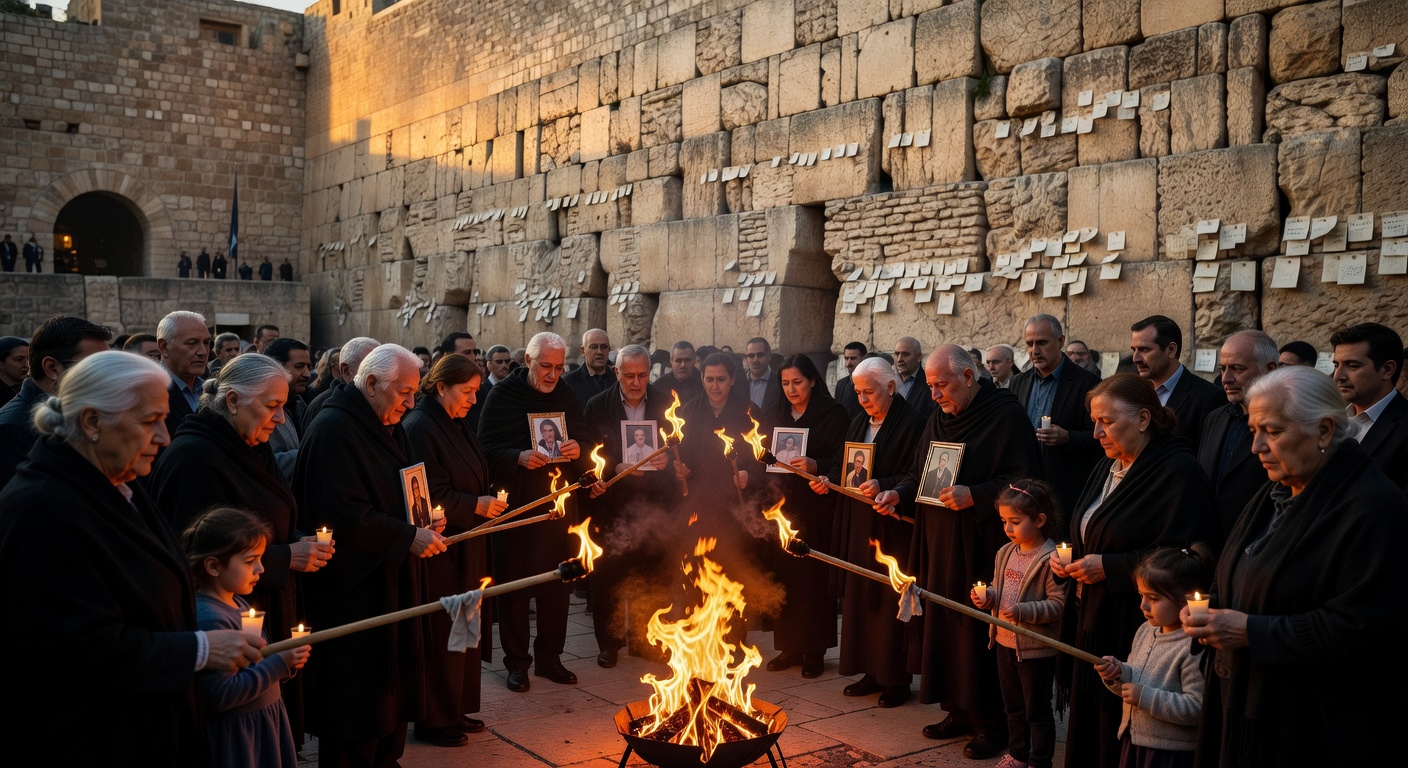
Chaplains recited prayers from the Book of Psalms, their voices carrying over the plaza's vast expanse. A youth choir from a local seminary performed "El Male Rachamim," the traditional prayer for the dead, drawing tears from the front rows where gold-star parents sat.
One father, whose son died in a Gaza border clash last October, later shared his thoughts with reporters. "Every year it hurts the same," said David Levy, 58, from Beersheba. "But seeing the president and chief of staff here reminds us the nation remembers."
Rabbi Shmuel Rabinovitch, rabbi of the Western Wall, guided the spiritual elements of the night. He described the plaza as a place where history's weight meets present-day mourning. "These stones have witnessed millennia of Jewish perseverance," said Rabbi Shmuel Rabinovitch, rabbi of the Western Wall.
Security remained tight, with barriers and checkpoints encircling the Old City entrance. Police reported no incidents, allowing the focus to stay on remembrance. By 21:30, as the ceremony concluded, participants dispersed into Jerusalem's narrow streets, many heading to private family memorials.
Haaretz provided live coverage of the speeches, noting Herzog's emphasis on medical personnel among the fallen. N12 reported on the precise timing synced with the nationwide siren at 19:59. The Kotel.org site detailed the torch-lighting logistics for the 20:00 start.
For Americans watching from afar, the event underscores Israel's position as a key U.S. ally in the Middle East. U.S. Ambassador to Israel Mike Huckabee issued a statement earlier that day: "America stands with Israel in honoring these heroes who secured freedom for their people."
Retired U.S. Army Gen. David Petraeus, speaking to CNN from Washington, reflected on shared military sacrifices. "Israel's Memorial Day mirrors our own—raw, unflinching acknowledgment of the cost of vigilance," said Retired U.S. Army Gen. David Petraeus.
Tomorrow transitions to Yom HaAtzmaut, Israel's Independence Day, blending mourning with celebration. Fireworks are planned over the same Jerusalem skyline, a stark shift from tonight's sobriety. Families like the Levys will mark both, navigating grief toward national pride.
The Western Wall Plaza, site of this annual rite, closes briefly after midnight for preparations. By dawn, the torches will burn low, but the memory of 25,648 names endures in Israel's collective consciousness.