
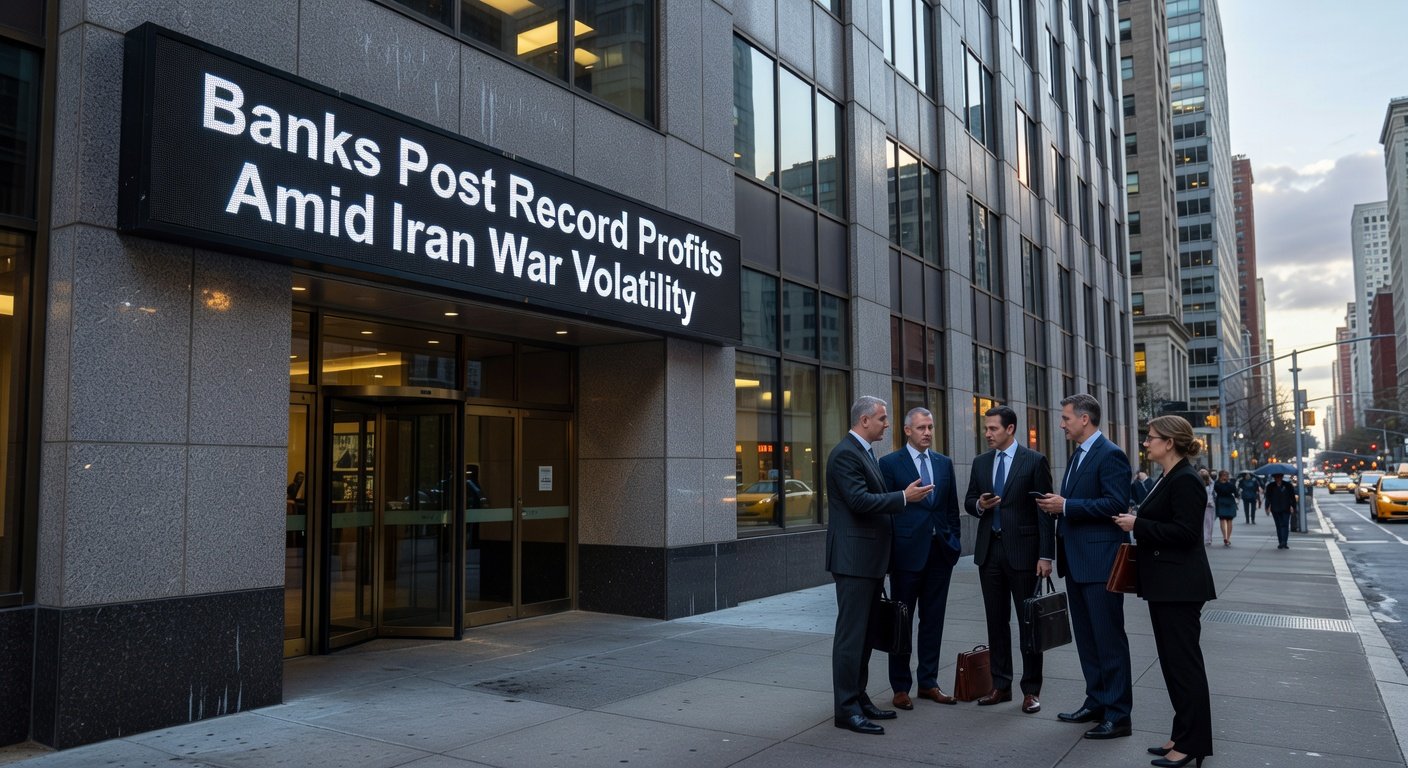
Wall Street's biggest banks kicked off first-quarter earnings with blockbuster numbers on Tuesday, fueled by trading windfalls from the Iran war's market chaos.
JPMorgan Chase reported net income of $16.5 billion for Q1 2026, smashing estimates with earnings per share of $5.94 against the $5.45 forecast. Markets revenue hit a record $11.6 billion, up 20% from a year earlier, as traders navigated oil spikes and gold rallies tied to Middle East hostilities.
Chairman and CEO Jamie Dimon highlighted the results in the earnings release.
Dimon pointed to broader economic pressures in his shareholder letter.
The U.S. economy remained resilient in the quarter... There is an increasingly complex set of risks—such as geopolitical tensions and wars, energy price volatility, trade uncertainty, large global fiscal deficits and elevated asset prices.
Morgan Stanley followed with revenue of $20.6 billion and earnings per share of $3.43, pushing return on tangible common equity to 27.1%. Citigroup swung to net income of $5.8 billion, or $3.06 per share, a 56% jump year-over-year, thanks to fixed-income trading gains amid volatile bond markets.
Bank of America saw commodities trading revenue surge 60% from swings in oil and gold prices linked to Iran conflict disruptions. Wells Fargo rounded out the week with net income of $5.3 billion, or $1.60 per share, up 15% year-over-year, on revenue of $21.4 billion, a 6% increase.
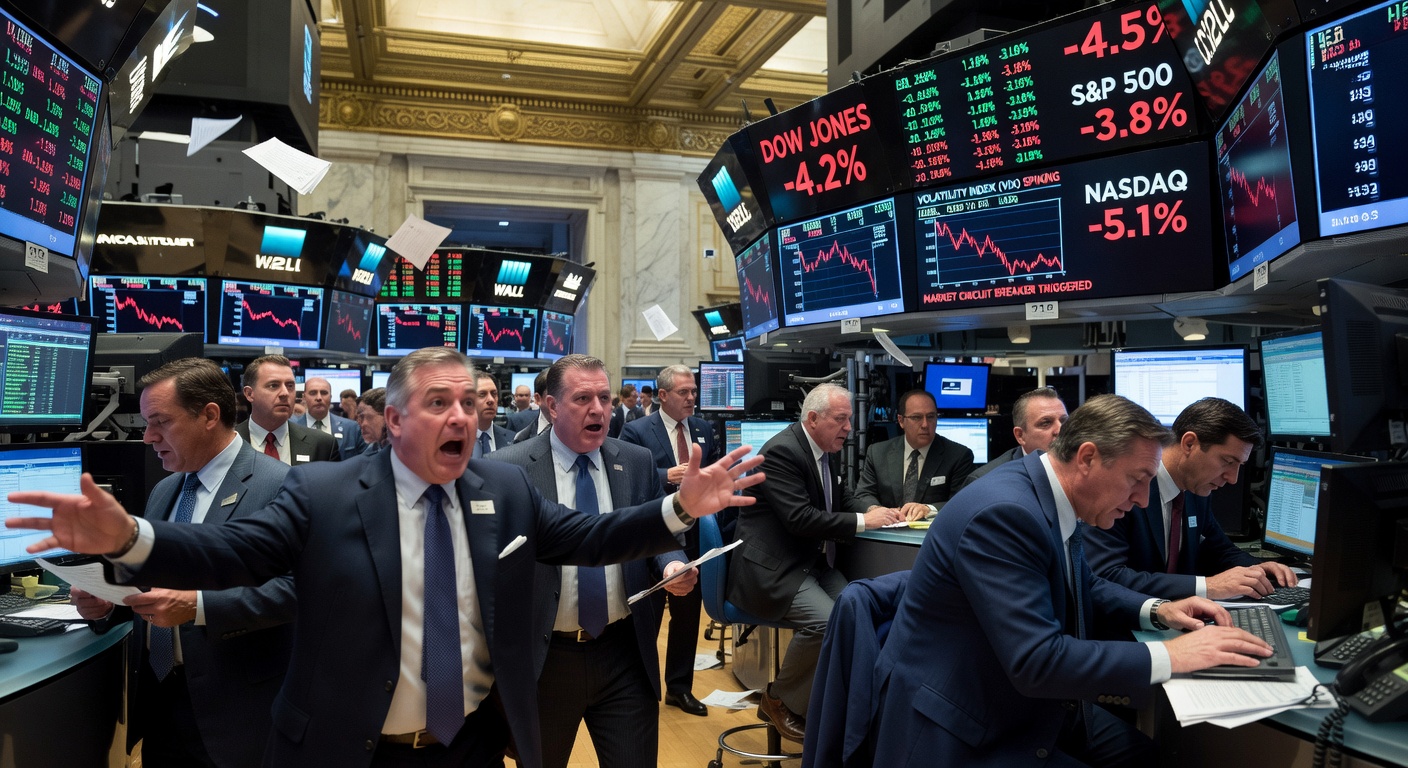
Investors shrugged off the beats. Large-cap bank stocks fell 1.8% year-to-date through April 14, underperforming the S&P 500's 2% gain. Private credit competition and deposit flight worries weighed on sentiment, even as consumer spending held firm.
Reports from Reuters detailed the earnings in five charts, showing trading as the standout performer across JPMorgan, Bank of America and Wells Fargo. The Wall Street Journal noted the S&P 500 touching 7000 points on resilient consumer data, despite bank sector drags.
Analysts at Keefe, Bruyette & Woods pointed to sustained trading revenue if Iran tensions persist. "Volatility from the war has been a boon for desks, but normalizing rates could pressure investment banking," said Frederick Cannon, chief equity strategist at the firm.
Goldman Sachs equity research head Lindsay Rosner echoed that view. "Banks beat on trading, but loan growth slowed to 2% quarter-over-quarter amid high funding costs," she told Reuters. "Geopolitical risks remain the wildcard."
Federal Reserve data showed U.S. bank deposits stable at $18.1 trillion through March 2026, but non-interest bearing accounts dipped 1.2% from war-driven cash hoarding. JPMorgan added 1.2 million checking accounts, signaling deposit momentum.
Citigroup CEO Jane Fraser credited cost cuts for the profit rebound. "We've reduced expenses by $2.1 billion since 2024, positioning us for growth even in choppy markets," Fraser said on the earnings call April 15.
Wells Fargo CFO Mike Santomassimo highlighted credit quality. "Net charge-offs hit 58 basis points, below expectations, with delinquencies flat at 3.8% for consumer loans," he noted.
The earnings landed April 13-15 against a backdrop of Iran airstrikes disrupting Persian Gulf shipping lanes, sending Brent crude above $95 per barrel on April 14. Gold futures climbed 12% in the quarter to $2,850 an ounce.
Bank of America trading head Matthew Koder attributed the 60% commodities jump to those moves. "Clients sought hedges against energy shocks, driving volumes," Koder said in the filing.
Morgan Stanley's trading haul topped $9 billion, with equities up 15%. CEO Ted Pick told investors: "Our platform thrived in volatility, but we're watching private credit's $1.7 trillion assets under management erode traditional lending."