
Explosions rocked the Strait of Hormuz on April 18, 2026, as Iran's IRGC Navy fired on two commercial vessels, including Indian-flagged ships, less than 24 hours after declaring the waterway open.
The abrupt reversal came amid escalating tensions. A U.S. naval blockade of Iranian ports, launched April 14 with over 10,000 personnel, had halted 90% of Iran's sea trade within 36 hours. Iran retaliated by restricting access to the strait, through which 20% of the world's oil supply flows daily.
IRGC forces deployed mines, drones, and enforced tolls on ships passing through designated routes. Despite the U.S.-Israel war sinking 90% of Iran's regular navy, the IRGC's asymmetric tactics held firm, proving geography's enduring power.
"The Strait of Hormuz is under the control of the Islamic Republic," declared Mohammad Bagher Ghalibaf, Iran’s parliament speaker, in a televised address from Tehran that evening.
Shipping traffic halved immediately after the blockade's start, according to USNI News reports. Crisis Group analysts noted Iran's economy relies on sea trade for 90% of its exports, making the U.S. move a direct economic stranglehold.
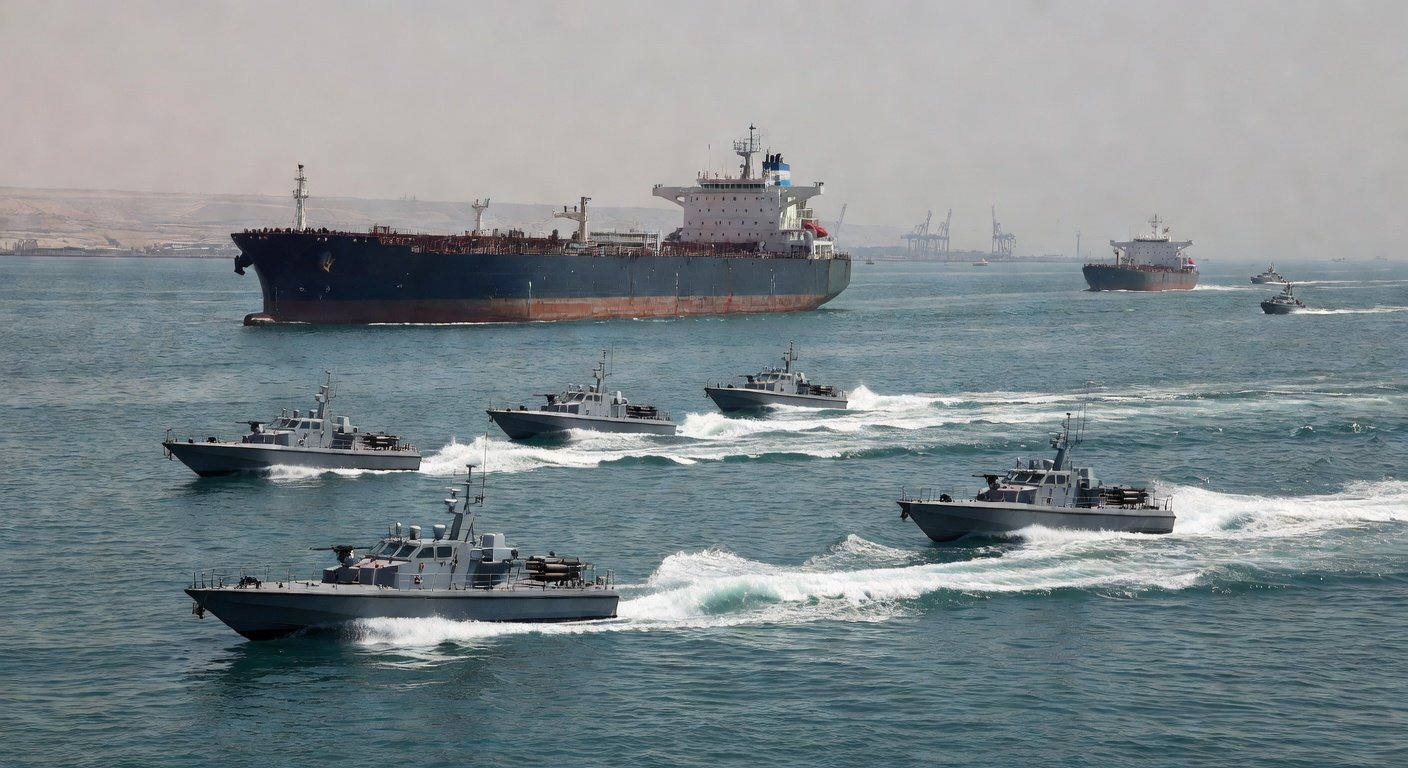
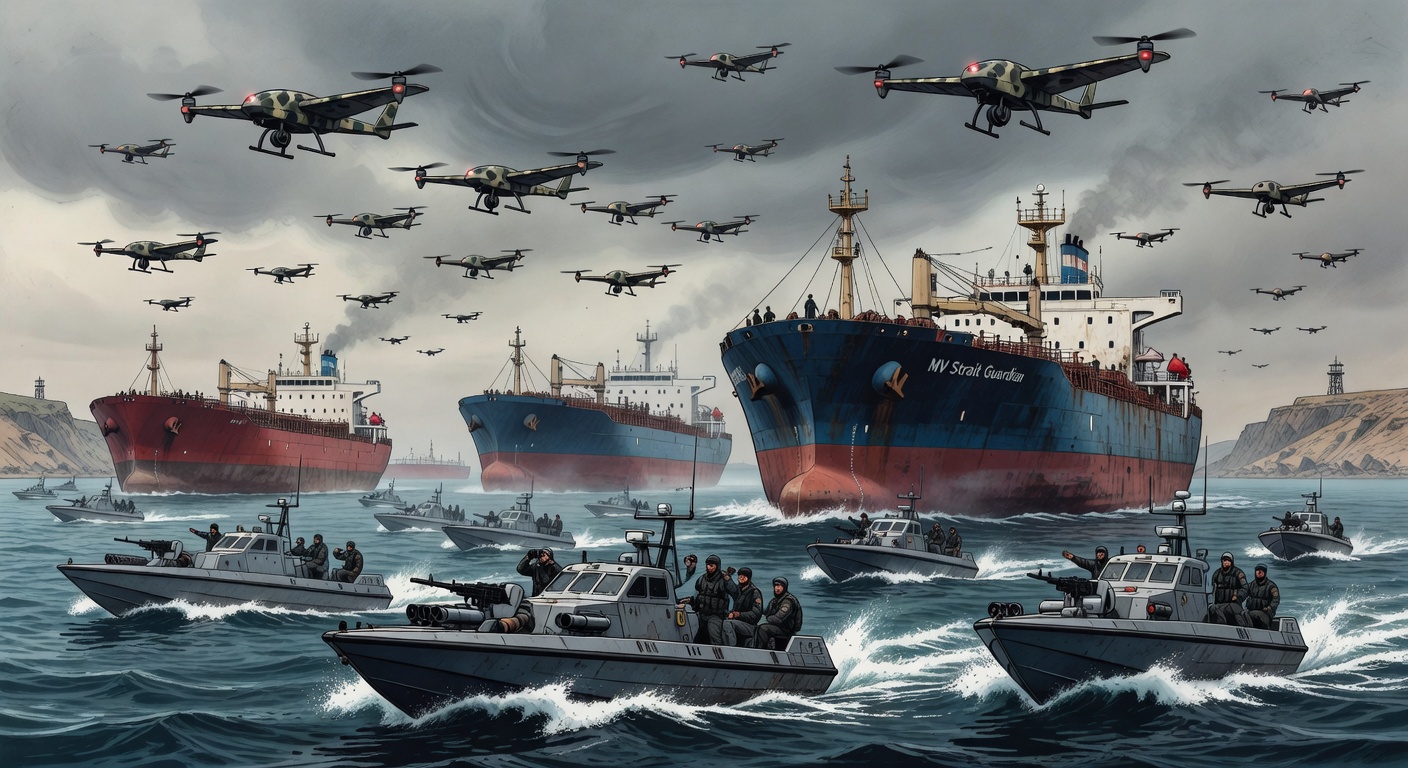
In the Persian Gulf's narrow confines, Iranian speedboats swarmed tankers, while drones buzzed overhead. One Indian vessel, the MV Ocean Pride, reported warning shots at 2:15 p.m. local time, forcing it to divert.
Citrinowicz, speaking to the New York Times from his Washington office, highlighted Iran's playbook shift. Even with nuclear program curbs on the horizon, waterway dominance offers Tehran a low-cost deterrent against adversaries.
Al Jazeera footage captured IRGC speedboats circling a second vessel, the UAE-owned tanker Gulf Star, at 4:30 p.m. Crews abandoned deck positions as machine-gun fire echoed across the water.
U.S. Fifth Fleet commanders in Bahrain monitored from afar, enforcing their port blockade but avoiding direct strait confrontation. Pentagon spokespeople confirmed no American ships entered the restricted zones.
Oil prices spiked 8% in New York trading by midday April 18, with Brent crude hitting $92 per barrel. Analysts at ExxonMobil projected sustained disruptions could add $5 per barrel if closures persist beyond 48 hours.
Rear Adm. Mark Schwartz, U.S. Central Command's naval operations director, told reporters in Tampa that the blockade targets Iran's military logistics, not civilian trade. "Our focus remains on degrading IRGC capabilities while protecting global commerce," he said.
Iranian state media broadcast images of floating mines seeded across key channels. Brig. Gen. Alireza Tangsiri, IRGC Navy commander, warned on Press TV: "Any vessel ignoring our directives risks destruction."
The New York Times detailed conflicting signals from Tehran: an April 17 announcement opening the strait, followed by the April 18 crackdown. This whiplash underscores Iran's tactical flexibility.
For the U.S. and Israel, the war ravaged Iran's conventional fleet. Satellite imagery from Maxar showed wreckage of 17 frigates and destroyers in Bandar Abbas harbor, 90% of Tehran's blue-water navy.
Yet the IRGC's 1,500 small boats and drone swarms turned the strait into a no-go zone. Geography favors Iran: the 21-mile-wide passage at its narrowest pinches between Iranian mountains and Omani shores.
Dr. Farah Azizi, energy security expert at the Gulf Research Center in Dubai, observed tanker captains rerouting via longer Arabian Sea paths. "Iran's demonstrated it can inflict pain asymmetrically, even when outgunned," she told Al Jazeera.
India's shipping ministry issued an advisory for its 45 flagged vessels in the Gulf, urging compliance with IRGC routes and toll payments—reportedly $50,000 per transit for large tankers.
As night fell on April 18, satellite trackers showed zero transits through the main channel. China's state oil firm Sinopec confirmed three of its supertankers idled off Oman, awaiting clearance.
This standoff emerges as a blueprint for Iran. Post-conflict, regardless of nuclear deal terms, Hormuz leverage persists. Tehran gains a veto over global energy flows without firing long-range missiles.
Israeli officials, fresh from joint operations sinking Iran's fleet, now eye economic ripple effects. Gen. (Ret.) Yaakov Amidror, former national security advisor, noted in a Jerusalem Post interview: "They lost ships, but geography is their ultimate carrier-killer."
U.S. diplomats in Vienna, negotiating nuclear curbs, face added pressure. State Department sources say Iran's strait gambit complicates talks, proving deterrence beyond uranium enrichment.
By dawn April 19, IRGC radio chatter demanded blockade lifts before reopening. Commercial operators pray for de-escalation, as $1 billion in daily oil trade hangs in the balance.
The Persian Gulf simmers, a waterway where ancient trade routes meet modern warfare. Iran's message rings clear: control the strait, and adversaries pause.