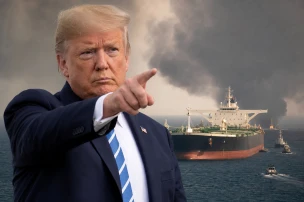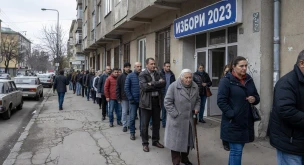

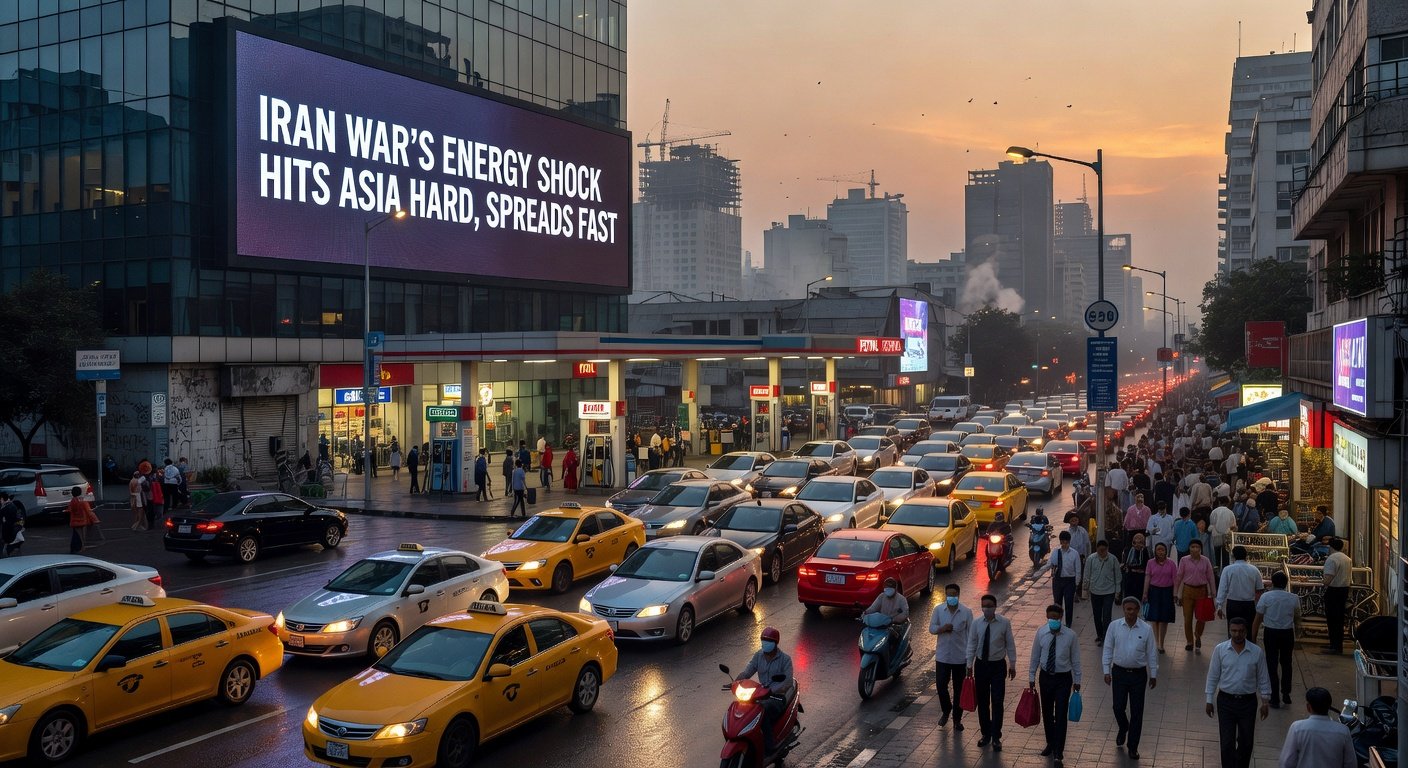
Factories in Thailand grind to a halt as fuel tanks run dry. In Manila, long lines snake around gas stations under a government-declared energy emergency.
The war in Iran slammed Asia-Pacific economies just days after the Strait of Hormuz closed on February 28, 2026. That narrow waterway carries 20% of the world's oil—20 million barrels per day—and most of Asia's liquefied natural gas imports.
Oil prices jumped 45% globally. Natural gas rose 55%. In Asia, spot LNG prices doubled to $25.40 per million British thermal units by March 4, after Qatar's Ras Laffan facility—20% of global LNG supply—issued a force majeure declaration.
Asia absorbs 80-90% of Hormuz oil and LNG flows. Japan, South Korea, India, and China now scramble for alternatives. Southeast Asia took the hardest hit first.
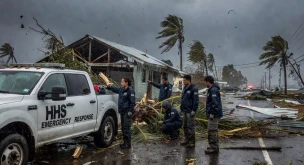
The Philippines announced an energy emergency on March 2. President Ferdinand Marcos Jr. ordered non-essential government vehicles off roads and urged households to conserve power. Manila's public transport halted mid-day as diesel stocks dwindled to critical levels.
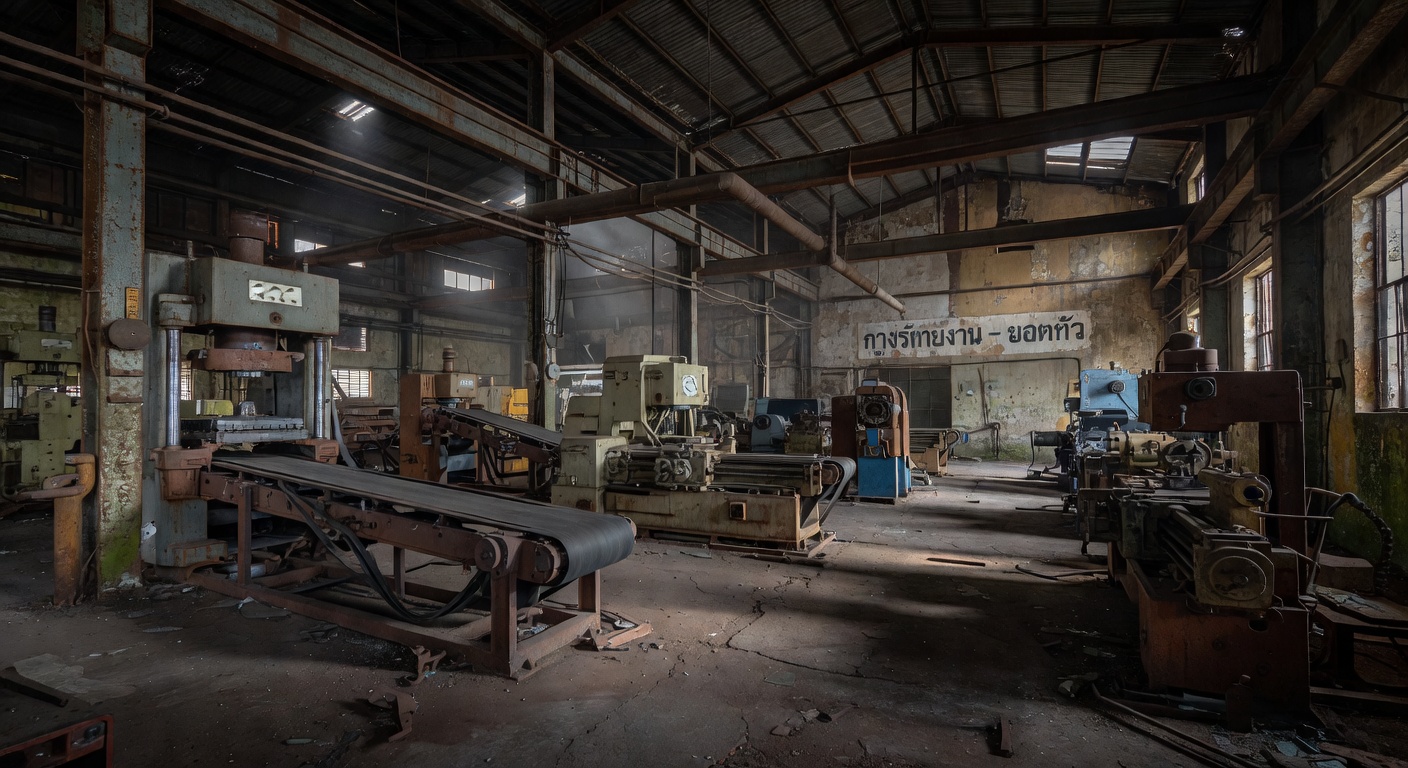
Thailand rations fuel at state pumps, limiting sales to 20 liters per vehicle. Factories in Bangkok's industrial zones cut production by 40%, citing less than 20 days of reserves. Prime Minister Srettha Thavisin held an emergency cabinet meeting March 3, pledging rice stockpiles to offset fertilizer price spikes from gas shortages.
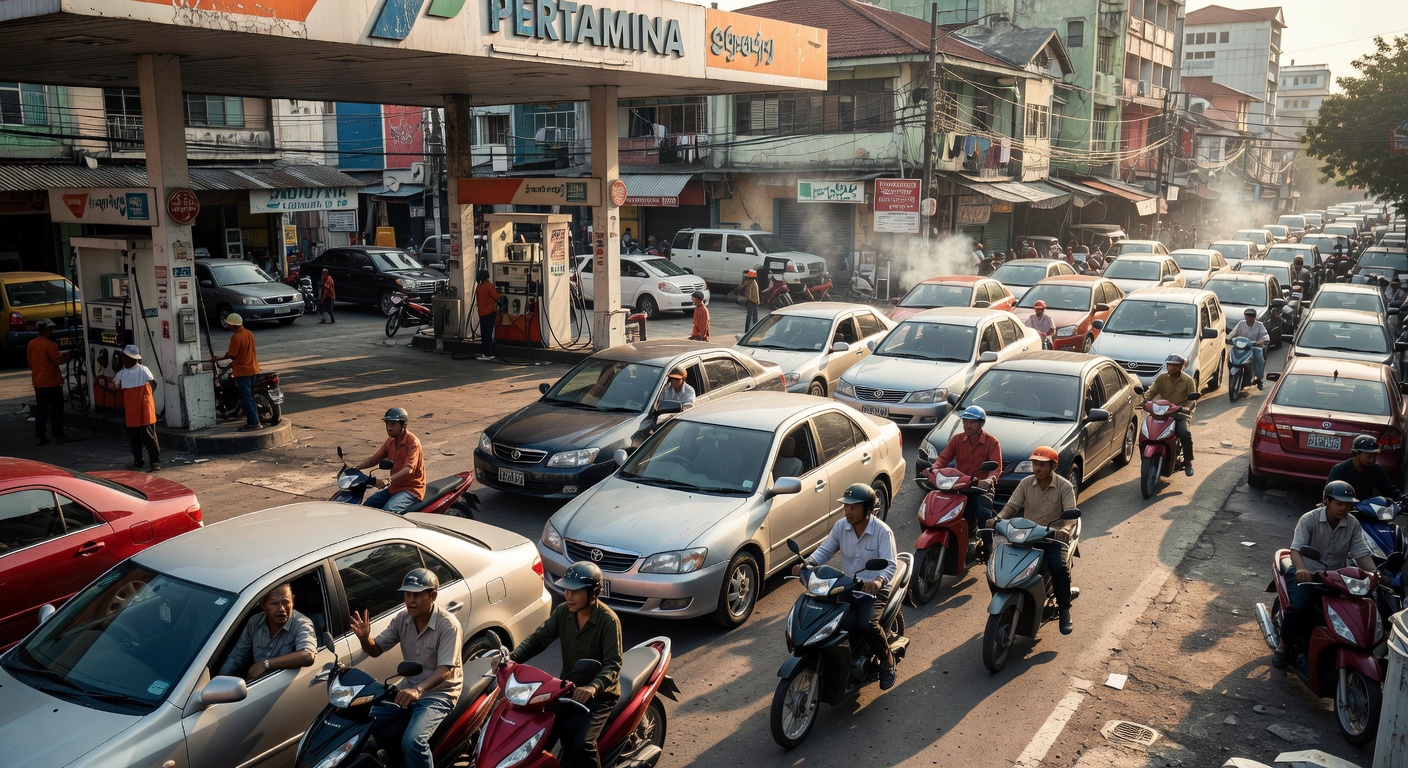
Vietnam followed suit, with Hanoi imposing factory curfews and blackouts in Ho Chi Minh City. Reserves there also hover below 20 days. Textile plants, powering 15% of exports, idle assembly lines.
UN ESCAP warns of broader ripple effects. Fertilizer plants in Indonesia and Malaysia shut down, threatening rice harvests across the region. Freight rates from Asia to Europe surged 140%, stranding container ships in Singapore's harbor.
Japan and South Korea, with diversified suppliers, face power plant alerts. Tokyo Electric Power Company rationed industrial supply March 4. Seoul's KEPCO warned of rolling blackouts if LNG tankers remain blocked.
India's refineries operate at 85% capacity, drawing down strategic reserves. New Delhi airlifted diesel to remote states. China tapped state stockpiles but saw factory output dip 5% in Guangdong province.
Economist Lim, cited in TIME magazine and who tracks Asia's energy vulnerabilities, stated: "This is not only a Middle East oil shock but also a wider Asian gas and power-security problem."
US officials monitor the fallout closely. Energy Secretary Jennifer Granholm stated March 3 that America boosts LNG exports to allies, shipping 5 million tons to Japan and South Korea since the closure. Pentagon spokespeople note naval escorts now protect tankers rerouting around Africa.
Analysts at The Diplomat describe the disruptions as stemming from US-Israel strikes on Iranian facilities, which prompted Tehran's Hormuz blockade. Wikipedia's page on the 2026 Iran war's economic impact logs daily updates: over 300 tankers idled, $2 billion in daily trade losses.
Singapore's refineries, processing 1.5 million barrels daily, cut output 30%. Malaysia's Petronas declared force majeure on LNG contracts. Indonesia faces aviation fuel shortages, grounding 20% of domestic flights.
UN News reports price surges hit households hardest. Electricity tariffs in the Philippines rose 25% overnight. Thai consumers pay 55% more for cooking gas.
Regional leaders convene virtually March 5. ASEAN summit calls for shared reserves. Japan's Prime Minister Fumio Kishida offers technical aid to Vietnam.
Freight forwarders in Hong Kong report chaos. Shipping lines like Maersk detour around the Cape of Good Hope, adding 10 days and $1 million per voyage.
Economists predict inflation spikes of 3-5% across Asia in Q2 2026. IMF teams deploy to Manila and Bangkok for assessments.
The shock spreads beyond energy. Vietnamese garment exports to the US dropped 25% last week. Indian steel mills curb shipments to Europe.
US businesses feel indirect pain. Apple suppliers in Vietnam halt iPhone assembly. Boeing delays 737 deliveries from Indonesian parts.
Restoring Hormuz flows remains elusive. Iranian state media vows retaliation against any clearing attempt. US carrier groups patrol nearby.
Asia's leaders push diversification. Thailand eyes Australian coal. India courts Russia for discounted oil. But short-term pain mounts daily.
Manila residents stockpile candles. Bangkok truckers protest ration limits. The war's tendrils stretch far, testing Asia's resilience.