

Seven out of eight pancreatic cancer patients who responded to a personalized mRNA vaccine remain alive six years after treatment.
The Phase 1 trial at Memorial Sloan Kettering Cancer Center in New York enrolled 16 patients with early-stage pancreatic cancer starting in February 2020. Researchers, led by Dr. Vinod Balachandran, director of the Olayan Center for Cancer Vaccines at the center, designed vaccines tailored to each patient's tumor mutations. Eight patients developed T cells that targeted their tumors.
Six-year follow-up data, presented on April 20, 2026, at the American Association for Cancer Research Annual Meeting in San Diego, revealed striking differences. Of the eight responders, seven are still alive. In contrast, only two of the eight non-responders survive.
Dr. Vinod Balachandran highlighted the challenge of pancreatic cancer during the presentation.
The first patient treated, Donna Gustafson, has remained cancer-free for six years. Her case underscores the vaccine's potential durability, as featured on NBC Nightly News from Memorial Sloan Kettering reports.
Immune responses proved long-lasting in responders. T cells continued to recognize and attack tumor cells years after vaccination, according to the data shared at AACR.
Dr. William Freed-Pastor, a physician-scientist at Dana-Farber Cancer Institute, reviewed the findings.
Pancreatic cancer carries a grim prognosis, with five-year survival rates below 12% for all stages combined, per American Cancer Society data. Early-stage cases like those in the trial offer better odds, but recurrence remains common after surgery and chemotherapy.
Genentech and BioNTech, collaborators on the vaccine technology, have launched a Phase 2 trial building on these results. The effort expands to more patients, testing the approach in broader settings.
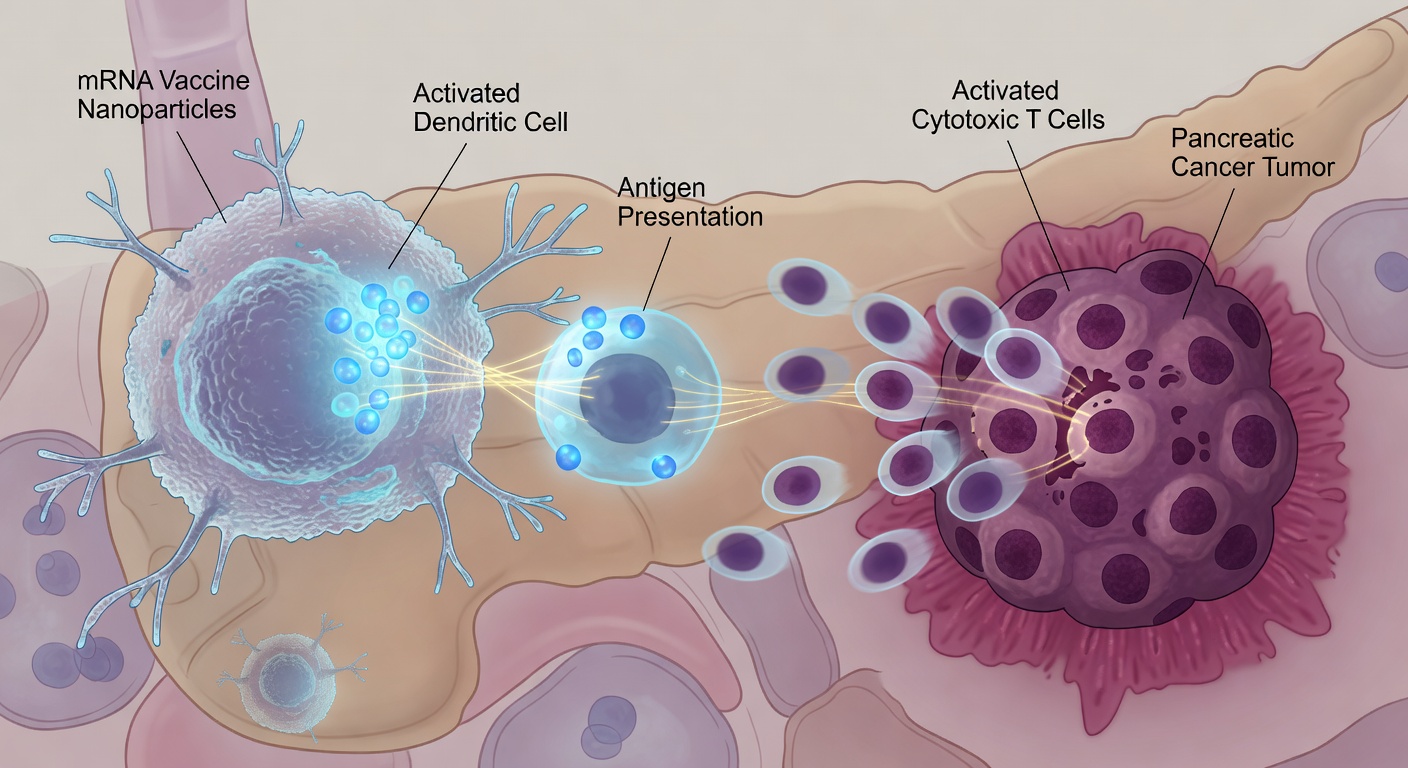
Dr. Balachandran's team sequenced tumor DNA from surgically removed pancreases to identify neoantigens—unique mutations for vaccine targeting. Patients received six doses post-surgery, alongside standard chemotherapy.
Responders showed neoantigen-specific T cells in blood and tumors, persisting over years. Non-responders lacked this targeted response, correlating with poorer outcomes.
NBC News covered the AACR presentation, noting the seven responders' survival against expectations for this aggressive disease.
The trial's small size limits broad conclusions, but durable immunity in a cancer notorious for immune evasion marks a milestone. Larger studies will test scalability and efficacy.
Patient advocates, including the Pancreatic Cancer Action Network, praised the data. U.S. funding from the National Cancer Institute supported the work, highlighting national stakes in oncology advances.
As Phase 2 enrolls patients, oncologists watch closely. Success could reshape treatment for one of America's deadliest cancers, claiming over 50,000 lives yearly.