
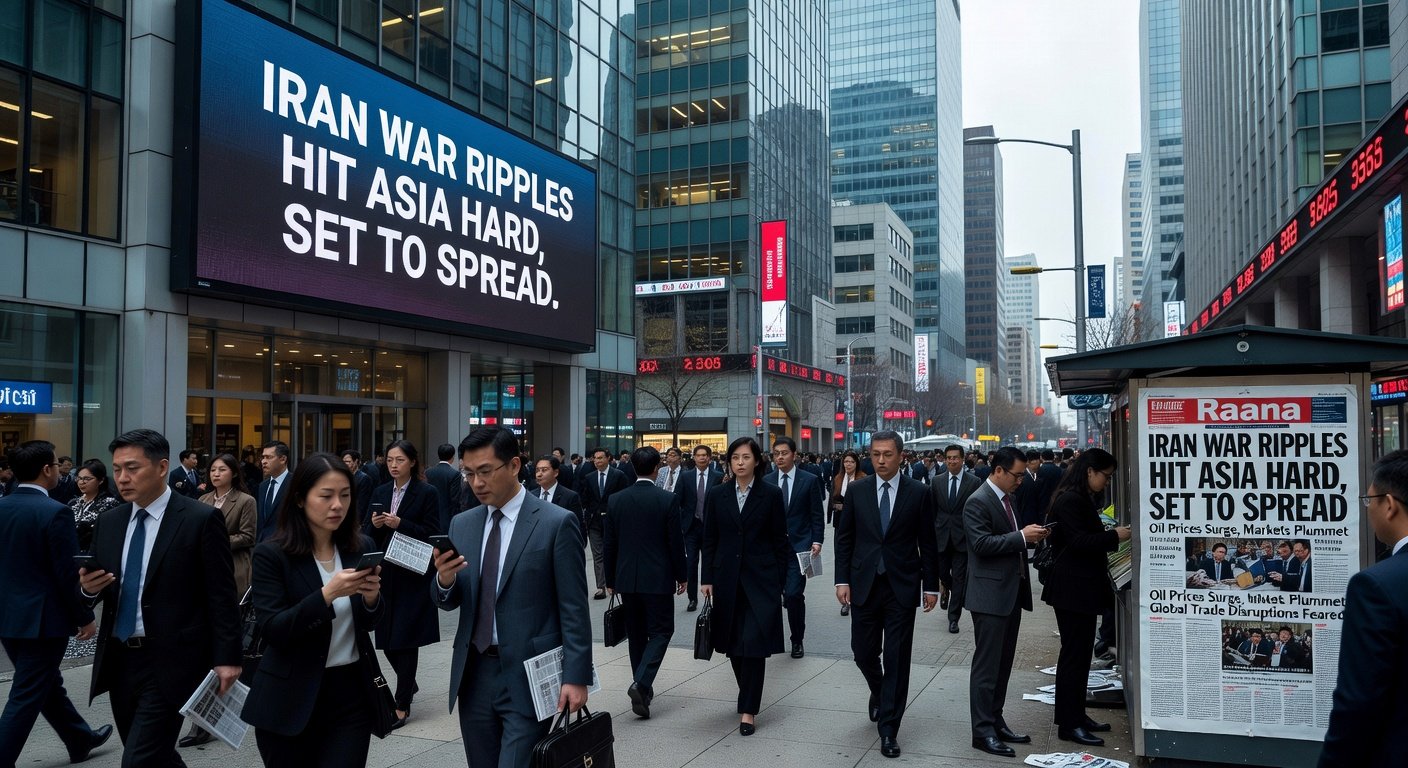
Gas stations in Manila ran dry within days of the Iran war's outbreak, forcing Filipino truckers to idle their rigs under a scorching sun.
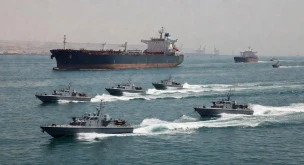
The conflict erupted on February 28, 2026, when fighting closed the Strait of Hormuz, severing 80% of oil and LNG flows bound for Asia. Ships now detour around Africa, adding weeks to voyages and billions to costs.
United Nations projections peg the Asia-Pacific economic hit at $299 billion this year, shoving millions into poverty by December. LNG imports across the region dropped 8.6% in March to 20.6 million tons—the sharpest decline since 2022.
Philippines, which sources 90% of its oil from the Middle East, imposed nationwide rationing by mid-March. Factories in Hanoi shuttered as Vietnam's power grid flickered, while Bangkok's street food vendors fired up generators at triple the price.
Supply shock accelerates as Asia's reliance on Hormuz flows—critical for Japan and South Korea, which import nearly all their energy—amplifies the pain. Phillip Cornell, senior fellow at the Atlantic Council’s Global Energy Center, described the fallout in stark terms.
Japanese refineries cut output by 15% last week, idling workers in Yokohama.
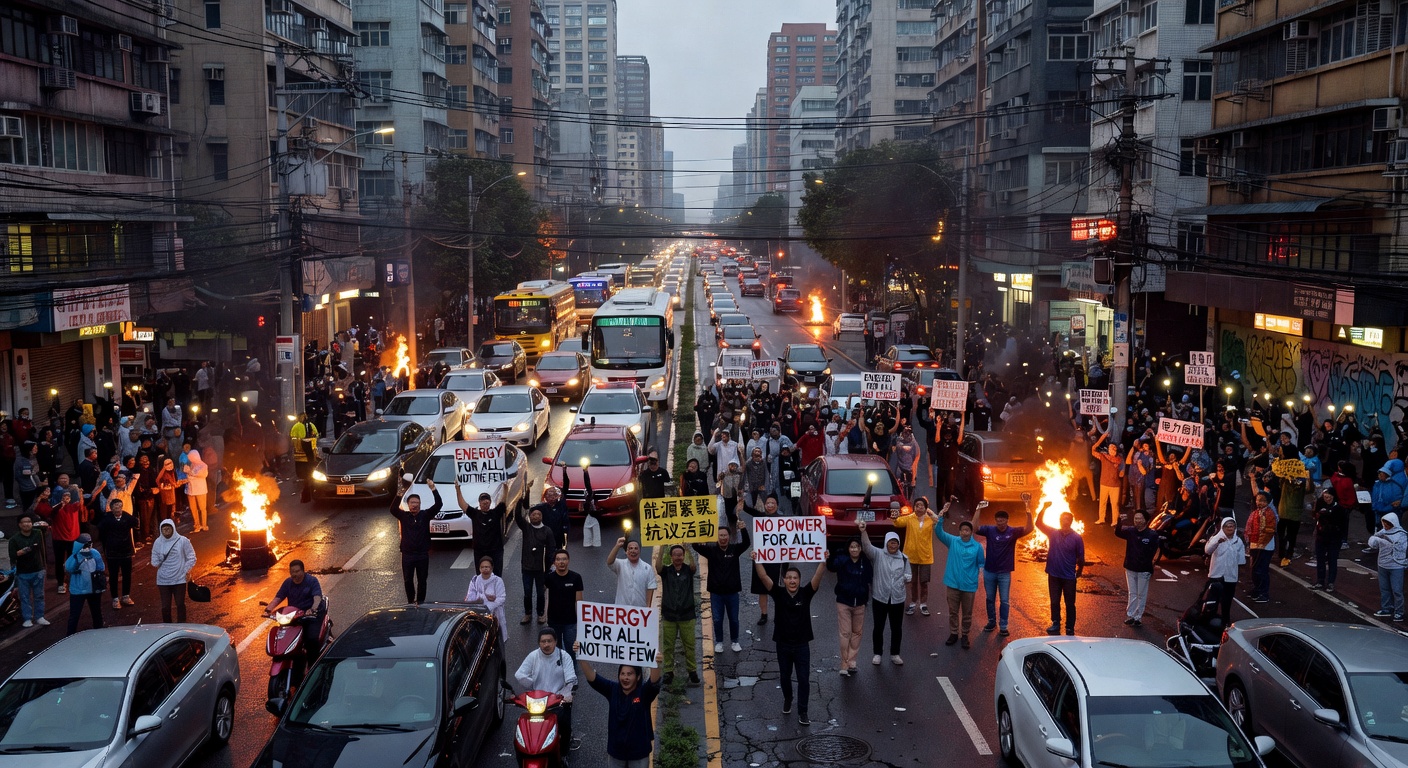
South Korean shipyards in Busan halted operations, stranding half-built vessels. Food prices spiked 22% in Seoul supermarkets as transport costs soared.
Southeast Asia feels acute pinch. In Thailand, rice mills in the central plains stand silent, their diesel pumps dry. Exporters report 30% shipment delays, hitting global supply chains.
Vietnamese garment factories, engines of the export economy, face blackouts every other night. Labor unrest brewed in Ho Chi Minh City last week, with 5,000 workers protesting unpaid wages.
The Soufan Center detailed these spillover effects in an April 20 report, highlighting how energy woes cascade into food and labor disruptions. "Philippines' 90% Middle East oil dependence leaves no buffer," the analysis stated.
Bloomberg data confirms the import plunge: Asia's March LNG intake of 20.6 million tons trailed February by 8.6%, as tankers rerouted or sat idle.
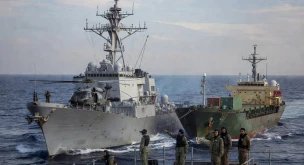
U.S. ties bind the crisis. American bases in Japan and the Philippines hum with activity as the U.S. Navy escorts select tankers through alternate routes. Pentagon officials confirmed two carrier groups deployed to the Indian Ocean by April 15.
Japan's Prime Minister Fumio Kishida addressed parliament on April 18, pledging $10 billion in emergency reserves release. "Our economy hangs by an energy thread," he said.
South Korea's Industry Minister Ahn Duk-geun warned of recession risks, with GDP growth forecasts slashed to 0.8% for 2026. "Every barrel not arriving costs jobs," Ahn told reporters in Seoul.
Dr. Mei Ling, energy economist at the National University of Singapore, tracked the widening gaps. "Rerouting adds $15 per barrel in freight alone," she said. "That's $50 billion extra for Asia by summer."
Signs of broader spread emerge. India, less Hormuz-dependent, still saw diesel prices jump 18% in Mumbai. Indonesian palm oil refineries curtailed output, tightening global vegetable oil markets.
Australia's LNG exporters ramped up shipments to Japan, but at premiums straining budgets. "We're bridging the gap, but not forever," said CEO Samantha Galloway of Woodside Energy during an April 19 earnings call.
| Country | LNG Drop (March 2026) | Oil Import Reliance (ME %) |
| Japan | 12% | 95% |
| South Korea | 10% | 92% |
| Philippines | 15% | 90% |
| Thailand | 9% | 75% |
| Vietnam | 11% | 82% |
UN economists project poverty lines crossed for 25 million Asians by year-end, as inflation erodes wages. Factory closures in China's Guangdong province, while not Hormuz-tied, compound the strain from redirected trade.
Scenes from Jakarta to Tokyo echo: long fuel lines, dimmed lights, rising tempers. The New York Times reported on April 20 that crisis indicators—blackouts, ration cards, protest marches—multiply weekly.
As U.S. policymakers eye the Indo-Pacific's stability, the Iran war's energy choke underscores Asia's vulnerability. Tankers creep along Cape routes, but analysts warn reserves dwindle by June.
The shock waves show no sign of fading; instead, they build toward a regional storm.