
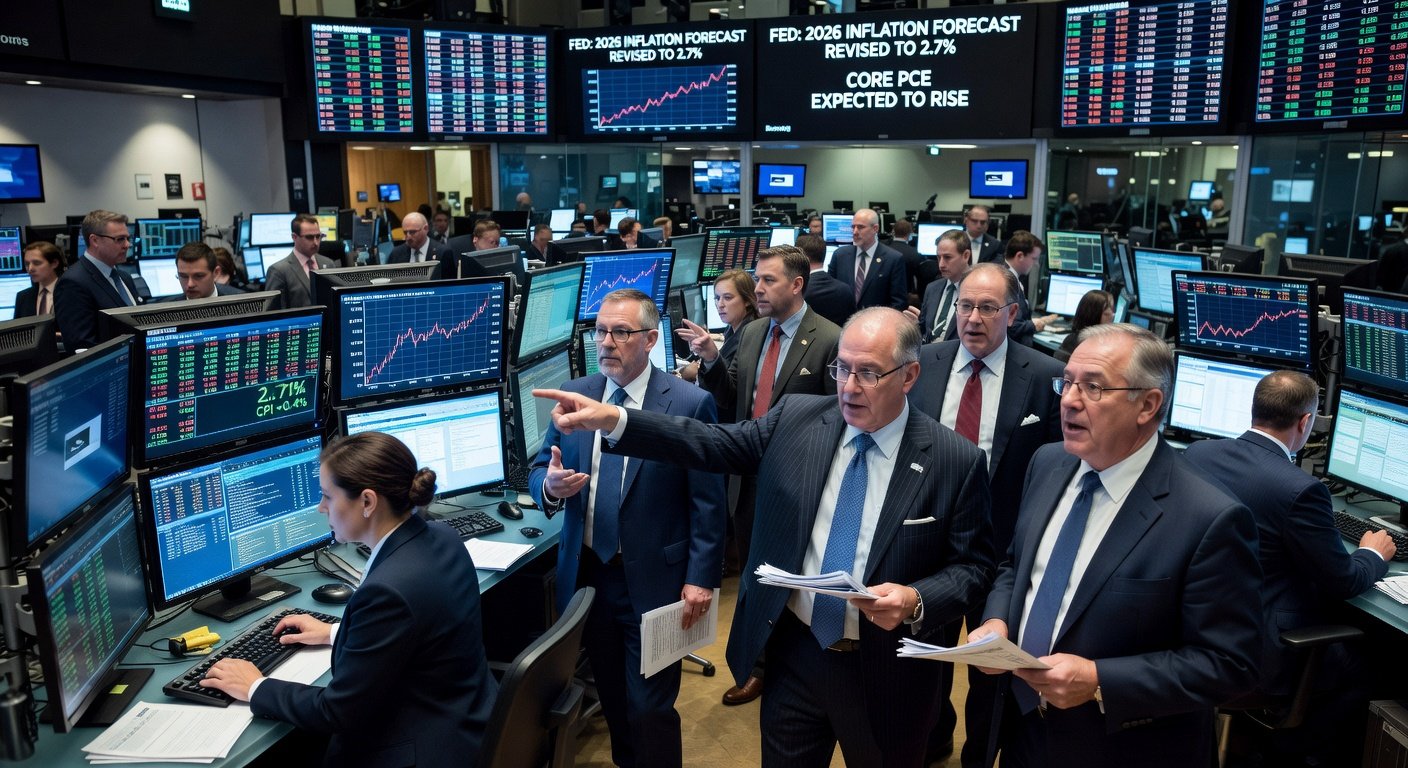
Federal Reserve officials gathered in Washington D.C. on March 18, 2026, and adjusted their long-term inflation outlook higher. In the latest Summary of Economic Projections, the median forecast for personal consumption expenditures inflation in 2026 climbed to 2.7%, up from 2.4% in the prior December estimates.
This upward revision reflects ongoing challenges from geopolitical tensions, particularly the U.S.-Iran war that has driven oil prices sharply higher. Energy shocks have compounded sticky domestic price pressures, forcing policymakers to recalibrate expectations even as they held interest rates steady at that meeting.
St. Louis Fed President Alberto Musalem addressed the shifting landscape on April 1, 2026. He defended the current policy stance amid recent energy price spikes.
Musalem's comments came as March CPI data printed at 3.3%, underscoring inflation's persistence three weeks after the Fed's projections. The central bank's PCE measure, which it targets at 2%, now anticipates elevated readings through 2026.
The OECD painted an even starker picture in its March 2026 report. It projected U.S. inflation at 4.2% for 2026, a jump from its earlier 2.8% estimate—well above the Fed's 2.7% median.
| Forecast | Prior | Revised (2026) |
| Fed PCE Inflation | 2.4% | 2.7% |
| OECD U.S. Inflation | 2.8% | 4.2% |
| March CPI | - | 3.3% |
Energy prices lie at the heart of these forecasts. The U.S.-Iran conflict has disrupted global oil supplies, pushing Brent crude above $90 per barrel in recent weeks. Tariffs proposed in ongoing trade disputes add further upward pressure on import costs.
Fed officials also nudged their 2026 core PCE projection higher, though exact figures remain centered around 2.5% in median terms. The federal funds rate path shows cuts to 3.50%-3.75% by then, from the current 4.25%-4.50% range.
Market reactions stayed muted immediately after the March 18 release, with the projections buried in the quarterly update. Bond yields ticked up slightly, reflecting investor recalibration to prolonged higher-for-longer rates.
Harm Bandholz, chief economist at CIBC, noted in a CNBC analysis that OECD's 4.2% call stems directly from war-related oil surges and tariff escalations.
The combination of Middle East tensions and protectionist policies has upended prior disinflation paths.
Bandholz pointed to supply chain vulnerabilities exposed by the conflict. Iran's restrictions on oil exports have tightened global markets, hitting U.S. pump prices at an average of $4.10 per gallon last week.
Philadelphia Fed President Patrick Harker offered a measured view in a March 20 interview. He stressed that while headline inflation faces headwinds, core trends still point toward the 2% goal over time.
Harker highlighted labor market resilience, with unemployment steady at 4.1% in March data. Wage growth, however, edges above levels consistent with price stability, adding to policymakers' caution.
The Fed's dot plot from March 18 signals three quarter-point cuts in 2026, landing the policy rate in the 3.50%-3.75% cluster. This assumes inflation moderates gradually despite the revised 2.7% PCE path.
Jerome Powell, Federal Reserve Chair, reiterated a data-dependent approach in his post-meeting press conference. He avoided specifics on the 2.7% figure but acknowledged external shocks as a key uncertainty.
Analysts at Goldman Sachs adjusted their 2026 inflation call to 2.9% post-projections, citing similar geopolitical risks. Jan Hatzius, the firm's chief economist, warned of potential spillovers if the U.S.-Iran war escalates.
Consumer impacts mount daily. Grocery prices rose 1.2% year-over-year in March, per BLS data, with energy-sensitive categories like transportation fuels up 5.8%.
San Francisco Fed President Mary Daly cautioned against overreacting to near-term volatility. In a March 25 speech, she noted that base effects from last year's oil plunge will fade, potentially easing headline prints later in 2026.
International comparisons underscore U.S. vulnerabilities. Eurozone inflation forecasts hover at 2.1% for 2026, buffered by milder energy exposure. China's producer prices deflate amid weak demand, contrasting American pressures.
The Fed's quiet revision—without fanfare in headlines—signals internal recognition of stubborn dynamics. Policymakers now grapple with balancing growth against inflation risks amplified by war and trade frictions.
As Middle East tensions simmer, all eyes remain on oil markets and incoming data. The next FOMC meeting in late April could clarify if the 2.7% path holds or requires further adjustment.