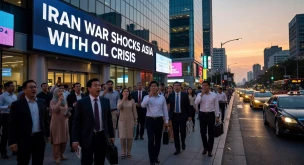

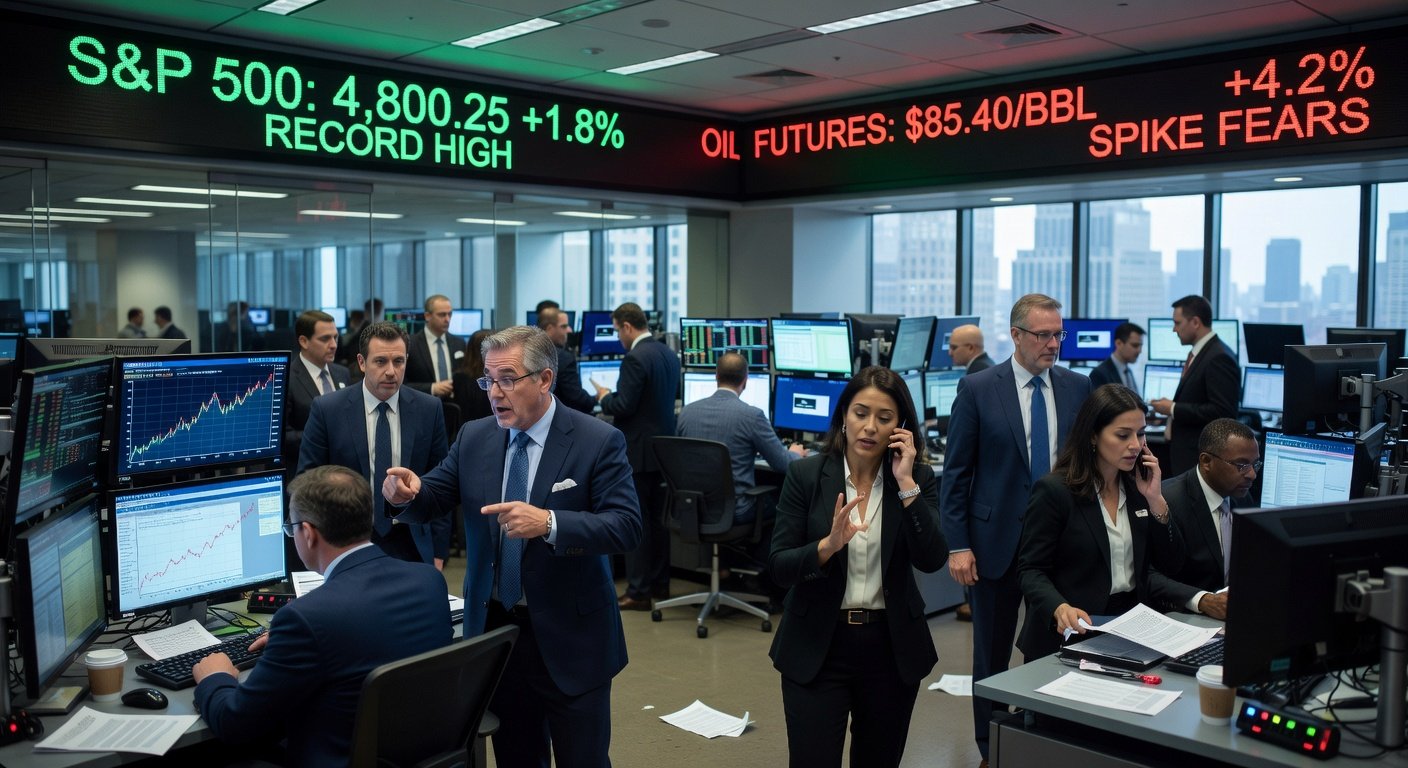
Wall Street traders watched the S&P 500 close at a record 7,126.06 on April 18, 2026, capping a 4.5% weekly gain driven by hopes of Middle East peace.
Brent crude oil plunged 10.3% that day to $90.38 per barrel, its steepest single-day drop since the Iran war erupted. The Strait of Hormuz reopened after weeks of blockade, easing immediate supply fears and boosting investor sentiment across U.S. equities.
Nicholas Colas, co-founder of DataTrek Research, noted the market's resilience.
Yet recession signals linger beneath the rally. Vanguard economists project that oil sustained at $150 per barrel would likely tip the U.S. into recession by dragging on consumer spending and corporate profits.
Bank of America slashed its 2026 U.S. GDP forecast to 2.3% from earlier estimates, while lifting core PCE inflation projections to 3.1%. High energy costs, they argue, squeeze household budgets in a nation where gasoline averages $4.80 per gallon nationwide.
JPMorgan's strategy team issued a stark warning on the rally's foundation.
The market is pricing in a quick end to the Middle East conflict... This is a high-risk assumption.Their analysts cut the year-end S&P 500 target to 7,200 from 7,500, citing oil volatility tied to Iran tensions.
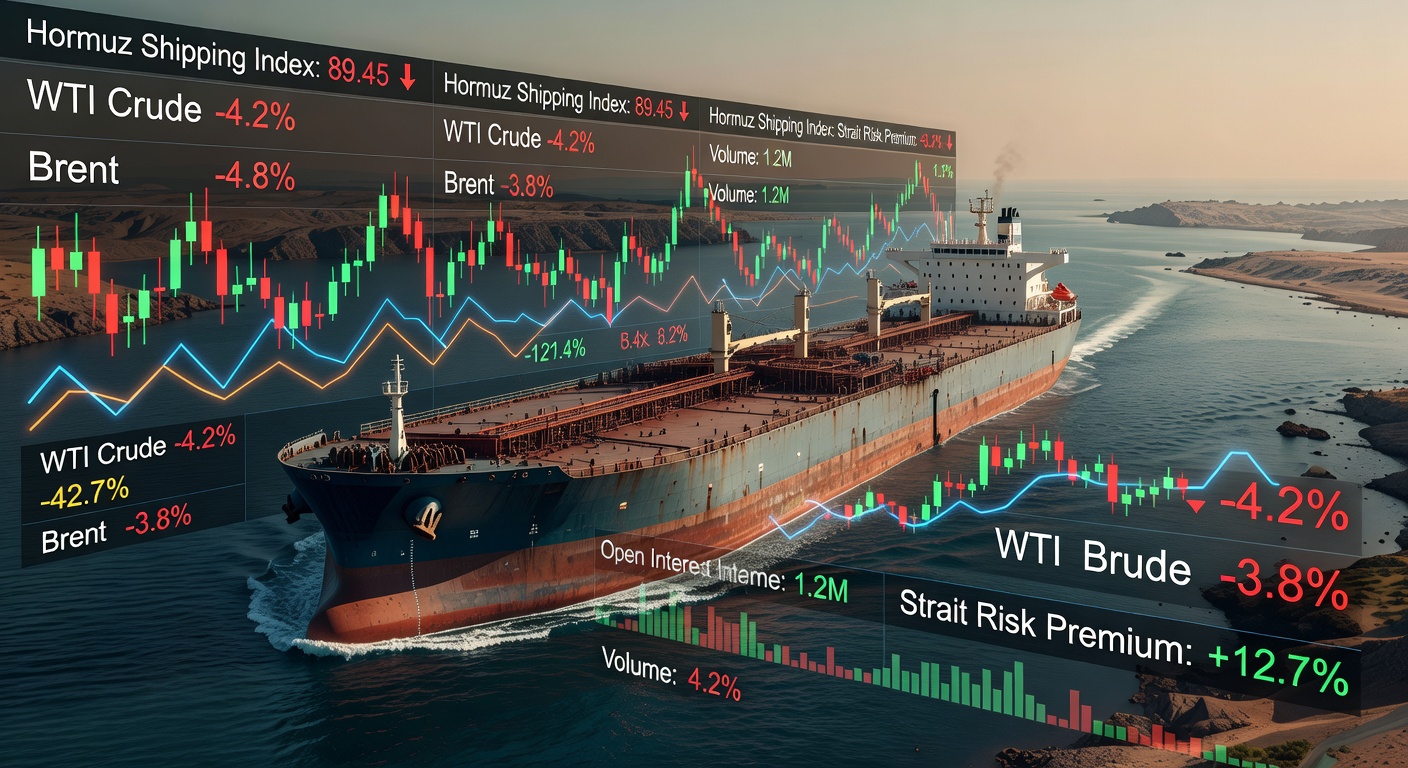
The International Monetary Fund added to the caution, forecasting that persistent oil above $90 could drive U.S. inflation to 6% by 2027. Their models show every $10 oil increase shaves 0.2% off GDP growth through higher transportation and manufacturing costs.
Motley Fool analysts highlighted Vanguard's $150 threshold as a critical line. At current levels, they see limited downside for stocks, but any Hormuz closure or Iran escalation could reverse gains swiftly.
Reuters reported Wall Street earnings expectations cooling amid these pressures. Corporate chieftains from ExxonMobil to Delta Air Lines have trimmed outlooks, with airlines facing $2 billion in added fuel expenses for the quarter.
New York Times coverage emphasized peace deal optimism propelling the S&P past 7,000 despite the Iran war's oil disruptions. Traders in New York cited diplomatic breakthroughs in Tehran as the rally's spark.
Federal Reserve watchers now debate rate paths. With inflation sticky and growth slowing, Chair Jerome Powell faces calls for a pause on cuts when the FOMC meets May 7 in Washington.
Retail investors piled in, per Charles Schwab data, with $15 billion in fresh equity inflows last week. Yet hedge funds trimmed energy shorts, betting on sub-$90 oil stabilization.
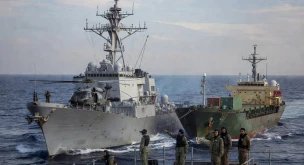
Geopolitical wires from the Strait of Hormuz report tankers flowing freely for the first time in 22 days. U.S. Navy escorts remain deployed, underscoring Washington's stake in global energy flows.
Economists at the New York Fed peg recession odds at 28% over the next year, up from 22% pre-spike. Their model factors oil's 40% surge since January, which added 1.2 points to CPI last month.
Sector rotation favored tech and consumer staples, with Apple up 2.1% and Procter & Gamble gaining 1.8%. Energy lagged, down 3% on the crude tumble.
As markets open April 19, all eyes turn to Iran's next move. A single drone strike could send Brent back above $100, testing the S&P's newfound highs.